Dinoustech Private Limited
How to Choose the Right Banking App Development Company
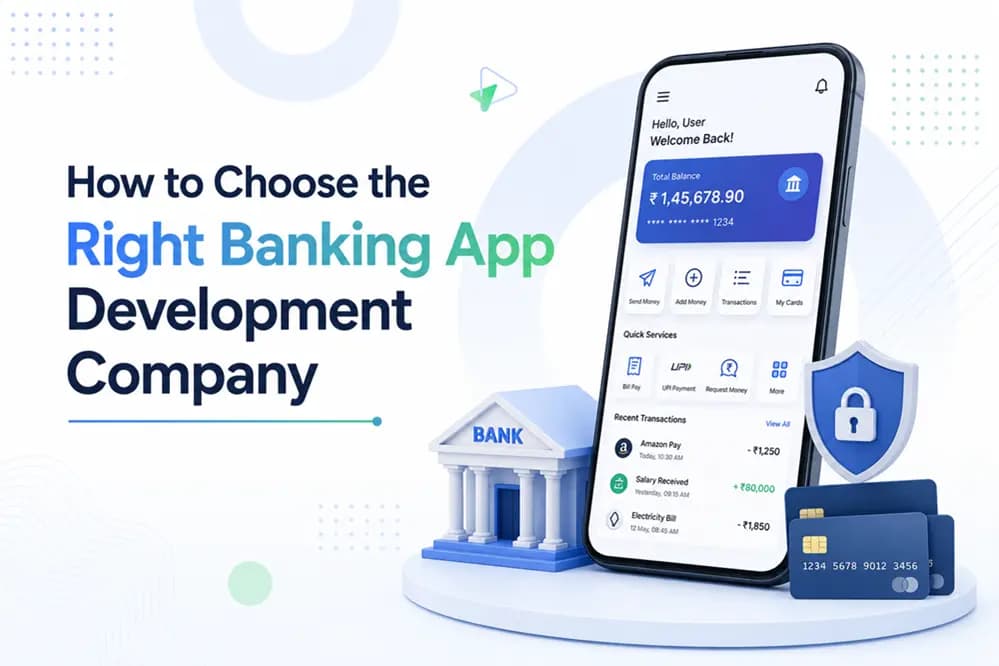
The banking industry has shifted rapidly toward digital services. Today, customers expect to transfer money, pay bills, manage investments, apply for loans, and access banking services from their smartphones. Mobile banking is no longer an optional service—it has become a core part of the customer experience.
This change has encouraged banks, fintech startups, credit unions, NBFCs, and financial institutions to invest in secure and scalable mobile banking solutions. As customer expectations continue to rise, businesses are looking for reliable technology partners who can build applications that combine security, performance, and a smooth user experience.
According to recent market research, the global digital banking platform market is expected to grow from USD 44 billion in 2026 to more than USD 155 billion by 2033, driven by increasing smartphone adoption, cloud technologies, artificial intelligence, and demand for digital financial services.
The mobile banking market is also expanding steadily and is forecast to grow at a CAGR of more than 13% through 2034, reflecting the increasing use of smartphones for everyday banking activities.
Banks are no longer competing only on financial products. They now compete on digital experiences. Customers expect instant account access, biometric authentication, real-time notifications, secure payments, personalized financial insights, and 24/7 availability. Institutions that fail to meet these expectations risk losing customers to digital-first competitors.
As technology continues to evolve, businesses need an experienced banking app development company capable of delivering secure, compliant, and future-ready banking applications that can support millions of users without compromising performance.
Why Choosing the Right Banking App Development Company Matters
Developing a banking application is very different from building a standard mobile application. Banking software handles sensitive customer information, financial transactions, regulatory compliance, fraud prevention, and cybersecurity. Even a small security weakness can affect customer trust and business reputation.
For this reason, selecting the right banking app development company should never be based only on development cost. Businesses should evaluate technical expertise, security capabilities, compliance knowledge, industry experience, and long-term support before making a decision.
An experienced development company understands banking workflows, payment systems, digital wallets, KYC verification, account management, lending platforms, investment services, and API-based integrations. They also know how to build scalable applications that maintain high performance during periods of heavy transaction volume.
Modern banking applications require continuous improvement after launch. Operating system updates, cybersecurity threats, regulatory changes, and customer expectations continue to evolve. A reliable technology partner provides ongoing maintenance, security updates, performance monitoring, and feature enhancements to keep the application competitive.
Many financial institutions also require complete digital ecosystems rather than standalone mobile applications. Customer portals, internet banking platforms, admin dashboards, CRM systems, reporting tools, and API integrations are equally important. Working with an experienced web development company ensures that mobile and web platforms operate together efficiently while delivering a consistent customer experience.
Businesses planning to expand into digital payments, lending, wealth management, or embedded finance should also consider partnering with a fintech app development company that understands the broader financial technology ecosystem.
Also Read: - Best Fintech App Development Company in India for Digital Payment Solutions
Key Factors to Evaluate Before Hiring a Banking App Development Company
Selecting the right development partner requires careful evaluation. A company may have an attractive website or impressive marketing materials, but businesses should assess its actual development capabilities before making a decision.
Industry experience should be one of the first evaluation criteria. Companies that have developed banking, fintech, insurance, payment, or lending applications understand financial regulations, security standards, and customer expectations better than general software providers.
Security expertise is equally important. Banking applications process confidential financial information every second. Your development partner should follow secure coding standards, implement strong encryption, support multi-factor authentication, perform regular security testing, and design applications according to modern cybersecurity best practices.
Scalability is another critical consideration. Banking applications must support growing numbers of users, increasing transaction volumes, and new digital services without affecting performance. Cloud-native architecture, microservices, and API-first development have become common approaches for building scalable financial applications.
Communication also plays a major role in project success. Businesses should choose development companies that provide clear timelines, milestone-based delivery, transparent pricing, and regular progress reports. Effective communication helps reduce misunderstandings and keeps projects aligned with business objectives.
Another factor is long-term support. Banking applications require continuous monitoring, bug fixes, operating system compatibility updates, regulatory compliance updates, and performance optimization. A company that offers reliable post-launch support helps protect your technology investment.
Finally, businesses should evaluate whether the development partner can integrate modern technologies such as Artificial Intelligence, machine learning, cloud computing, biometric authentication, blockchain, and predictive analytics. These technologies continue to shape the future of digital banking and improve both customer experience and operational efficiency.
Technical Expertise Every Banking App Development Partner Should Have
Technology forms the foundation of every successful banking application. Choosing experienced banking app developers ensures that your platform remains secure, scalable, and capable of supporting future business growth.
Professional banking application developers should have expertise in Android and iOS development, secure backend architecture, cloud infrastructure, RESTful APIs, payment gateway integration, biometric authentication, database optimization, DevSecOps practices, and financial data encryption.
Modern banking applications also require integration with payment networks, digital wallets, card management systems, credit scoring services, KYC verification providers, fraud detection platforms, and customer identity management systems. Developers should have experience working with these third-party services while maintaining security and compliance.
Artificial Intelligence is becoming increasingly valuable in digital banking. Banks now use AI to detect fraudulent transactions, automate customer support through virtual assistants, personalize financial recommendations, assess credit risk, and monitor suspicious activities. Businesses should work with development partners who understand how to implement AI where it creates measurable business value.
Application performance is equally important. Banking customers expect instant account access, fast transaction processing, and uninterrupted availability. Slow loading times or frequent downtime can reduce customer satisfaction and affect business credibility.
A professional banking software creation company follows structured development practices, including requirement analysis, UI/UX design, secure coding, automated testing, penetration testing, compliance validation, deployment, and continuous maintenance. These processes help deliver reliable applications that meet both customer expectations and financial industry standards.
For businesses looking for an experienced technology partner, Dinoustech has built a strong reputation as one of the trusted software development companies by delivering secure, scalable, and customized digital solutions. As a banking app development company, Dinoustech combines expertise in mobile development, cloud technologies, cybersecurity, AI integration, and enterprise software engineering to help financial institutions build modern banking applications that support long-term business growth.
Must Read: - How to Build an App Like CRED in 2026
Security, Compliance, and Data Protection
Security is the foundation of every successful banking application. Unlike many other mobile apps, banking platforms process highly sensitive information, including customer identities, account details, transaction records, payment information, and financial history. A single security weakness can lead to financial losses, regulatory penalties, and damage to customer trust.
When evaluating a banking app development company, businesses should make security one of their highest priorities. The development team should follow secure coding practices throughout the project lifecycle instead of adding security measures after development is complete.
Modern banking applications should include end-to-end encryption, secure API communication, biometric authentication, multi-factor authentication (MFA), role-based access control, device verification, session management, fraud detection, and real-time monitoring. These features help protect customer data while reducing the risk of unauthorized access.
Compliance is equally important. Financial institutions must follow industry regulations and security standards depending on their operating region. Development teams should have experience implementing secure payment systems, Know Your Customer (KYC) verification, Anti-Money Laundering (AML) workflows, PCI DSS requirements for payment processing, and data privacy regulations where applicable.
Artificial Intelligence is also improving banking security. AI-powered fraud detection systems can analyze transaction patterns, identify suspicious activities, and alert financial institutions before fraudulent transactions are completed. Machine learning models continue improving their accuracy by learning from new transaction data, helping banks respond to emerging security threats more effectively.
Cloud security has become another major consideration. Many banks now use cloud infrastructure to improve scalability and reduce operational costs. A reliable development partner should understand secure cloud deployment, encrypted data storage, automated backups, disaster recovery planning, and continuous security monitoring.
Choosing experienced banking app developers ensures that security is integrated into every stage of development rather than treated as an additional feature after launch.
Review Portfolio, Client Experience, and Industry Knowledge
Before hiring a banking software creation company, carefully review its portfolio and previous work. A company's past projects provide valuable insight into its technical capabilities, design quality, and ability to solve real business problems.
Look beyond screenshots and marketing materials. Review case studies that explain project objectives, technical challenges, implemented solutions, and measurable business outcomes. Strong case studies demonstrate how the company approaches complex software development projects and delivers results.
Industry experience is especially valuable in financial technology. Developers who have built banking applications, digital wallets, payment gateways, loan management systems, insurance platforms, investment applications, or fintech solutions already understand financial workflows and regulatory requirements.
Client testimonials and reviews can also help evaluate reliability. Positive feedback regarding communication, project management, delivery timelines, technical expertise, and post-launch support often indicates a dependable development partner.
Businesses should also examine the company's technical diversity. A capable development team should have experience building:
- Mobile banking applications
- Internet banking platforms
- Digital wallet solutions
- Payment gateway integrations
- Loan and lending applications
- Wealth management platforms
- Personal finance applications
- Corporate banking solutions
Companies that work across multiple financial sectors often bring valuable insights and proven development practices to new projects.
If your business plans to offer both mobile and browser-based banking services, selecting a web development company with financial software experience helps create a unified digital ecosystem that delivers a consistent customer experience across every platform.
Also Read: - How to Build a UPI-Enabled Fintech App in India
Development Process and Project Management
A structured development process reduces project risks, improves communication, and helps ensure that banking applications meet both business objectives and regulatory requirements.
Professional banking app development company teams usually follow Agile development methodologies, allowing businesses to review progress regularly and provide feedback throughout the project. Instead of waiting until the end of development, Agile enables continuous improvements during each development sprint.
The development journey typically begins with business analysis. During this phase, developers identify project goals, customer expectations, technical requirements, compliance needs, and integration requirements. This planning stage creates a roadmap that guides the entire project.
The next stage focuses on UI and UX design. Banking applications should provide simple navigation while maintaining high security. Customers should be able to complete tasks such as account management, fund transfers, bill payments, loan applications, and investment tracking without unnecessary complexity.
After design approval, developers begin building the frontend, backend, APIs, databases, and third-party integrations. Continuous testing takes place throughout development to identify bugs, performance issues, and security vulnerabilities before deployment.
Quality assurance includes functional testing, usability testing, performance testing, compatibility testing, penetration testing, and security validation. Thorough testing helps ensure that the application performs reliably across different devices and operating systems.
Once the application passes all testing stages, it is deployed to production environments. However, development does not end after launch. Ongoing monitoring, maintenance, feature enhancements, operating system updates, and cybersecurity improvements are necessary to maintain long-term application performance.
A transparent project management process also helps businesses stay informed through milestone tracking, regular meetings, progress reports, and clear communication.
Cost of Banking App Development and Pricing Factors
The cost of developing a banking application depends on several technical and business factors. There is no fixed development cost because every financial institution has unique requirements, security expectations, and feature priorities.
A basic banking application that includes customer registration, account management, transaction history, fund transfers, notifications, and customer support generally requires a lower investment than enterprise-grade banking platforms.
More advanced banking solutions may include:
- Digital onboarding and eKYC
- AI-powered financial insights
- Personal finance management
- Loan management systems
- Investment and wealth management
- Card management
- QR code payments
- UPI integration
- Digital wallets
- Multi-bank account aggregation
- Corporate banking modules
- Fraud detection systems
- Advanced analytics dashboards
Each additional feature increases development complexity and overall project cost.
Several factors influence pricing:
- Application complexity
- Android and iOS platform support
- UI/UX design requirements
- Security and compliance implementation
- API integrations
- Cloud infrastructure
- AI and machine learning features
- Quality assurance
- Third-party service licensing
- Post-launch maintenance
Businesses should avoid selecting a development partner based only on the lowest quotation. Lower initial pricing often results in limited scalability, weaker security, and higher maintenance expenses over time.
Instead, evaluate the overall value offered by the fintech app development company, including technical expertise, security capabilities, communication, long-term support, and experience with financial software.
For organizations seeking a long-term technology partner, Dinoustech delivers customized banking and fintech solutions designed around each client's business objectives. The company's expertise in secure mobile development, enterprise software engineering, AI integration, cloud technologies, and financial software enables businesses to build scalable digital banking platforms that support future growth.
Must Read: - Creating Scalable Payment & Wallet Platforms for Financial Growth
Questions to Ask Before Hiring Banking App Developers
Choosing the right technology partner is a major investment for any financial institution. Before signing a contract, businesses should ask detailed questions that help evaluate technical expertise, security practices, project management, and long-term support. The answers will help you determine whether the company can deliver a secure, scalable, and reliable banking solution.
Start by asking about the company's experience in the banking and fintech industry. A team that has successfully delivered banking platforms, payment systems, lending applications, or digital wallet solutions will better understand financial workflows, compliance requirements, and customer expectations.
You should also ask which technologies they recommend and why. Experienced banking app developers should explain their technology choices based on your business goals, expected user traffic, security requirements, and future scalability instead of offering a generic solution.
Project management is another important discussion point. Ask how progress will be monitored, how frequently updates will be shared, and who will serve as your primary point of contact throughout development. Companies with structured communication processes usually complete projects more efficiently.
Security should remain a central topic during every discussion. Ask how customer data will be protected, how payment information will be encrypted, and which authentication methods will be implemented. The company should also explain how it manages security testing, penetration testing, vulnerability assessments, and regulatory compliance.
Businesses should also clarify ownership of the source code, project documentation, intellectual property rights, maintenance agreements, and future feature development. These details help prevent misunderstandings after deployment.
Some useful questions include:
- Have you developed banking or fintech applications before?
- Which security standards do you follow?
- How do you handle regulatory compliance?
- What technologies will you use?
- How will you ensure application scalability?
- What testing process do you follow?
- Who owns the source code after project completion?
- What post-launch support is included?
- How do you manage future upgrades and security updates?
These questions provide a clear picture of the company's expertise and long-term commitment.
Why Businesses Choose Dinoustech
Financial software development requires technical expertise, strong security practices, and a deep understanding of the banking industry. Businesses need a partner that can deliver secure applications while supporting future business growth.
Dinoustech has established itself as one of the trusted software development companies by delivering customized software solutions for startups, enterprises, fintech companies, and financial institutions. The company focuses on building scalable, secure, and user-friendly banking applications that align with modern customer expectations.
As an experienced banking app development company, Dinoustech follows a business-first development approach. Every project begins with understanding client objectives, regulatory requirements, user expectations, and long-term business plans before selecting the appropriate technology stack.
The company's services include:
- Banking application development
- Mobile banking solutions
- Internet banking portals
- Digital wallet development
- Payment gateway integration
- Loan management software
- Financial management platforms
- API development and integration
- Cloud migration
- Enterprise software development
- Quality assurance and security testing
- Ongoing maintenance and technical support
Dinoustech also helps businesses implement Artificial Intelligence, machine learning, predictive analytics, biometric authentication, cloud-native infrastructure, and automation to improve customer experience and operational efficiency.
For organizations planning to build complete digital ecosystems, Dinoustech offers expertise beyond mobile applications. As a web development company, it develops secure web portals, customer dashboards, administrative platforms, and enterprise banking systems that integrate seamlessly with mobile applications.
Businesses looking for an experienced fintech app development company benefit from Dinoustech's knowledge of digital payments, financial APIs, lending platforms, investment solutions, and regulatory technology. This broad expertise enables clients to launch secure and scalable financial products while adapting to changing market demands.
The company's commitment to quality, transparent communication, modern technologies, and long-term client relationships makes it a reliable technology partner for digital banking projects.
Conclusion
Digital banking continues to reshape the financial services industry. Customers now expect secure, fast, and convenient banking experiences through mobile and web applications. As competition increases, financial institutions must invest in technology that improves customer satisfaction while maintaining the highest standards of security and compliance.
Selecting the right banking app development company plays a critical role in achieving these goals. Businesses should evaluate technical expertise, industry experience, security capabilities, development processes, communication, and long-term support before choosing a development partner.
An experienced team of banking app developers can build applications that support secure transactions, regulatory compliance, cloud scalability, AI-powered automation, and seamless customer experiences. Investing in quality development today helps reduce operational risks and future maintenance costs.
If your organization plans to launch a mobile banking application, digital wallet, payment platform, lending solution, or enterprise banking system, partnering with a trusted banking software creation company provides the technical foundation needed for long-term success.
For businesses seeking complete financial software solutions, Dinoustech offers end-to-end development services as both a banking app development company and fintech app development company. From strategy and UI/UX design to mobile development, cloud deployment, security implementation, API integration, and post-launch support, Dinoustech delivers scalable digital banking solutions designed for future growth.
Frequently Asked Questions
1. How do I choose the best banking app development company?
Look for a company with proven banking and fintech experience, strong security practices, regulatory compliance knowledge, scalable architecture, transparent communication, and long-term maintenance services.
2. How much does banking app development cost?
The cost depends on application complexity, supported platforms, security requirements, integrations, compliance needs, and custom features. Enterprise banking platforms require a higher investment than basic mobile banking applications.
3. What features should a modern banking application include?
Essential features include secure login, biometric authentication, account management, fund transfers, bill payments, transaction history, digital wallets, push notifications, customer support, analytics, and fraud detection.
4. Why is security important in banking application development?
Banking applications process confidential financial information and transactions. Strong encryption, multi-factor authentication, secure APIs, and fraud detection protect customer data and maintain regulatory compliance.
5. What technologies are commonly used for banking app development?
Popular technologies include Kotlin, Swift, Flutter, React Native, Java, Node.js, .NET, Laravel, PostgreSQL, MongoDB, AWS, Microsoft Azure, Google Cloud, and AI-powered analytics.
6. How long does it take to build a banking application?
A basic banking application generally takes 4–6 months, while enterprise-grade banking platforms with advanced security, compliance, and AI features may require 9–15 months, depending on project complexity.
7. Why should businesses invest in custom banking software instead of ready-made solutions?
Custom banking software provides greater flexibility, stronger security, easier integration with existing banking systems, better scalability, and complete ownership of the source code.
8. Why should businesses choose Dinoustech?
Dinoustech delivers secure and scalable banking software, fintech applications, digital payment platforms, mobile banking apps, and enterprise financial solutions. With expertise in AI, cloud technologies, cybersecurity, API integration, and custom software development, the company helps financial institutions build reliable digital products that support long-term business growth.