Dinoustech Private Limited
How to Build an App Like CRED in 2026
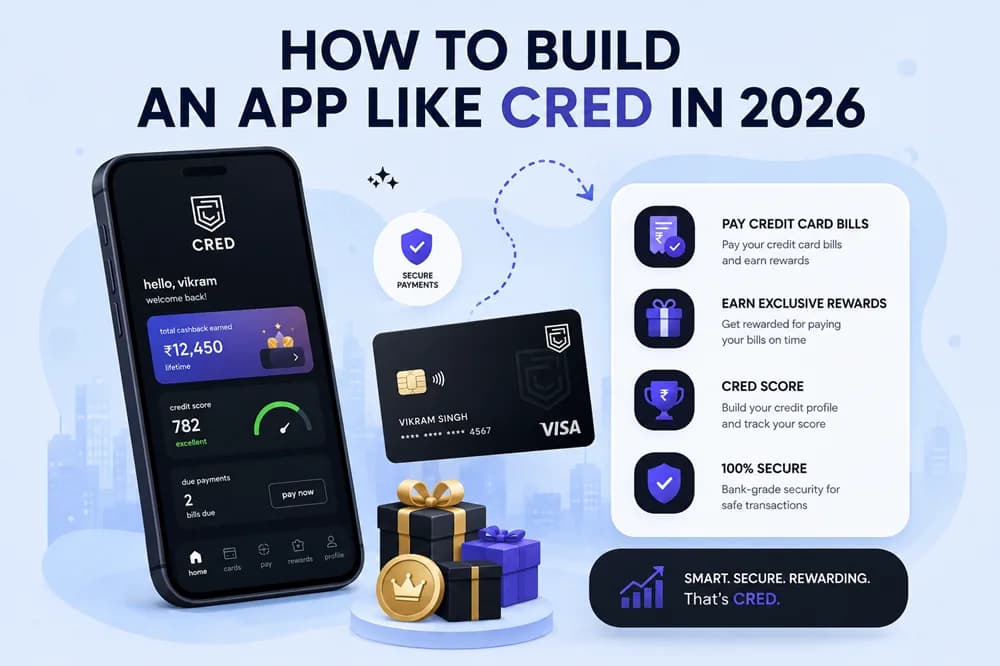
A CRED-style app still makes sense in 2026 because India’s digital finance market keeps growing fast, and users now expect more from a money app than simple bill payment. IMARC values the India fintech market at USD 142.5 billion in 2025 and projects it to reach USD 642.9 billion by 2034. At the same time, UPI processed about 22,000 crore transactions in 2025, and monthly UPI volume crossed 2,000 crores in August 2025. That tells you the habit is already there: people are comfortable paying digitally, tracking money in apps, and using mobile-first finance tools every day.
CRED also gives a strong product reference point. Its app store listing says it is a members-only app for payment experiences and says it serves over 1.4 crore creditworthy members. Its official site says the app helps users manage credit cards, improve credit score, track spending, receive payment reminders, and check credit data. The same product family now also covers UPI payments, Tap to Pay, sending money to other UPI apps, and even tracking investments and bank balances through CRED Money. That makes it a strong model for a premium finance app in 2026.
What an app like CRED really is
A CRED-like app is not just a bill payment app. It is a premium financial experience built around trust, rewards, clean design, and useful money tools. CRED’s official pages show a clear pattern: it helps users pay credit card bills, scan QR codes, make online payments, send money through UPI, transfer money to a bank account, and track credit score and spending behavior. The app also connects financial action with reward-based engagement, which is why it feels more like a product club than a normal utility app.
That matters because the build goal is not to copy CRED’s visuals. The goal is to copy the product logic. A strong fintech app development company should focus on three things: making payments easy, making credit behavior visible, and making the experience feel premium enough that users want to return. A fintech software creation company should also think beyond credit cards and plan for UPI, rewards, credit score checks, bill reminders, and personal finance tracking. That is where the app starts to feel useful instead of generic.
Also Read: - Develop a Fintech App Similar to LazyPay: Features, Cost & Tech Stack
Start with the business model before you write code
The first step is not the UI. It is the business model. A CRED-like product can make money in several ways: payment-led engagement, merchant partnerships, premium features, financial product distribution, rewards programs, and carefully designed upsells. CRED itself positions the app around better payment habits, premium experiences, and credit-related value, which shows that the product works best when it solves a financial need and keeps the user engaged with a premium layer on top. That is the right starting point for anyone who wants to build a CRED-style platform in 2026.
A fintech app development company should help the founder decide whether the app will target credit-card users only, or whether it will also include UPI, rewards, wealth views, loans, or merchant offers. The scope changes the product, the risk, and the cost. If the app is built too broad on day one, it can become slow to launch and hard to maintain. A strong fintech app developers team will usually recommend a lean first release with a clear path to add more value later. That keeps the product focused and gives the business room to test the market early.
Must-have features your CRED-like app needs
A CRED-like app needs a simple, clean onboarding flow. The user should be able to sign up, verify identity, connect cards or accounts, and reach the core app value quickly. CRED’s current product pages show how much the app relies on clear payment actions, credit score visibility, and financial reminders. If your app hides those core actions behind a messy flow, users will leave. A mobile app development company should make onboarding short, calm, and easy to understand from the first screen.
The next layer is the money workflow. That includes credit card bill payment, UPI payments, offline scan-to-pay, tap-to-pay, sending money, bank transfers, payment reminders, and transaction history. If you want the app to feel premium, the payment flow should show status clearly and remove friction at every step. The user should always know what is happening, what is pending, and what is completed. A web development company should also build a strong admin panel so the business team can manage users, content, offers, support, and risk controls without touching the main app every time.
A third feature layer is trust-building information. CRED’s official site says users can check and refresh their credit score, review spending patterns, and see payment reminders and hidden-fee insights. That tells you the app is not only about payment execution. It is also about helping users manage financial behavior. A CRED-style product should include dashboards for credit score, spend patterns, bill due dates, and maybe wealth snapshots if you want to extend into products like CRED Money. That is how the app earns daily relevance.
Must Read: - Create a Fintech App Like Wise for Global Transactions
The tech stack should support speed, trust, and scale
A premium finance app needs a stack that can handle secure transactions, frequent updates, and a smooth user experience. The app should have a mobile front end, a reliable backend, secure APIs, a database layer for accounts and transactions, notification systems, analytics, and a web dashboard for support and operations. A mobile app development company should focus on performance on both Android and iPhone, because finance users expect fast loading and clean flows on the device they use most.
The backend has to be strong enough to support UPI, bill payments, card-linked actions, reminders, and account states without delay. CRED’s own pages show how much the product depends on secure payment flows and encrypted transactions. That means your development plan should include strong access control, transaction logs, and secure data handling from day one. A fintech software creation company should also plan for growth, because India’s digital payments keep increasing and 705 banks were live on UPI by March 2026. That kind of scale demands a system that can grow with demand instead of breaking under it.
Security and compliance are core features, not extras
Fintech users do not forgive weak security. If they do not trust the app, they will not link cards, move money, or use premium flows. CRED’s own site says it encrypts data and transactions to create a secure experience for members. That is a good reminder for anyone planning a similar product: security has to sit inside the product, not around it. The app should use strong authentication, safe session handling, encrypted transport, and clear audit trails.
Compliance matters too. India’s digital payment ecosystem is large and growing, which means financial products must handle user identity, transaction integrity, and privacy with care. The RBI has also been pushing the ecosystem toward safer behavior by warning lenders about digital fraud and supporting safer domain naming for financial use cases. That means a fintech app development company should not treat compliance as a final checklist. It should build it into the product flow, the admin tools, and the support process from the start.
Also Read: - Cost to Create an App Like Paytm for Digital Payments & UPI
The development process should stay lean and structured
The right build process usually starts with product discovery, but not in the vague sense. It means defining who the users are, what pain points the app solves, what financial actions it supports, and how the app will make money. After that comes UX design, mobile app screens, backend logic, integrations, testing, and launch support. A fintech app developers team should not rush into code before the financial flow is clear. If the app does not know what problem it solves, the product will drift fast.
Testing is where finance apps either gain trust or lose it. Your app has to handle edge cases like failed bill payments, delayed UPI states, duplicate actions, login issues, and notification errors. A strong fintech app development company will test the app on real devices, under realistic network conditions, and with realistic transaction behavior. That is where a web development company can support the internal side too, especially if the business needs dashboards, support consoles, or campaign tools. Good testing is not a finishing step. It is part of product quality.
What affects the cost of an app like CRED
The cost depends on scope, integrations, security, design quality, and the number of platforms you want to support. A simple MVP with bill reminders, payment views, and a basic rewards layer costs far less than a premium app with UPI, tap-to-pay, card linking, credit score pulls, spending insights, personalized offers, and a full admin panel. If you want wealth tracking too, the build becomes larger because CRED Money-like functionality adds new screens, new data flows, and more testing.
The market itself also supports a serious investment. IMARC estimates India’s fintech market at USD 142.5 billion in 2025 and projects it to reach USD 642.9 billion by 2034. That growth suggests there is room for premium finance apps, but only for teams that build with discipline. A fintech software creation company should help you match scope to budget instead of forcing every idea into version one. That is how you keep the build realistic and the launch fast.
Must Read: - How to Build a Real-Time Payment App Like Zelle
Who should build it
A CRED-like app needs a partner that understands finance, user experience, mobile performance, web operations, and product strategy together. A strong fintech app development company should know how to design for trust, reduce friction, and keep the product clean under heavy usage. A mobile app development company should make the consumer experience fast and simple. A web development company should build the admin and operations layer so the business can move without friction.
Dinoustech can fit into that shortlist as one of the software development companies founders may consider when they want a practical build, clear product thinking, and a team that can handle both mobile and web delivery. The real test is simple: does the partner understand how to build a premium finance app that users trust every day? If the answer is yes, the business can move from idea to product with a much better chance of success. In 2026, that is what separates a basic fintech app from a product people keep using.
Building an app like CRED in 2026 is not about copying one product. It is about building a premium finance experience that fits the way users now manage money in India. The opportunity is large because digital payments are already part of daily life, fintech continues to grow, and users now expect apps to do more than just process transactions. If the product is simple, secure, and genuinely useful, it has a real chance to earn loyalty. That is the kind of app worth building now.