Dinoustech Private Limited
Top IT Challenges Businesses Face in 2026
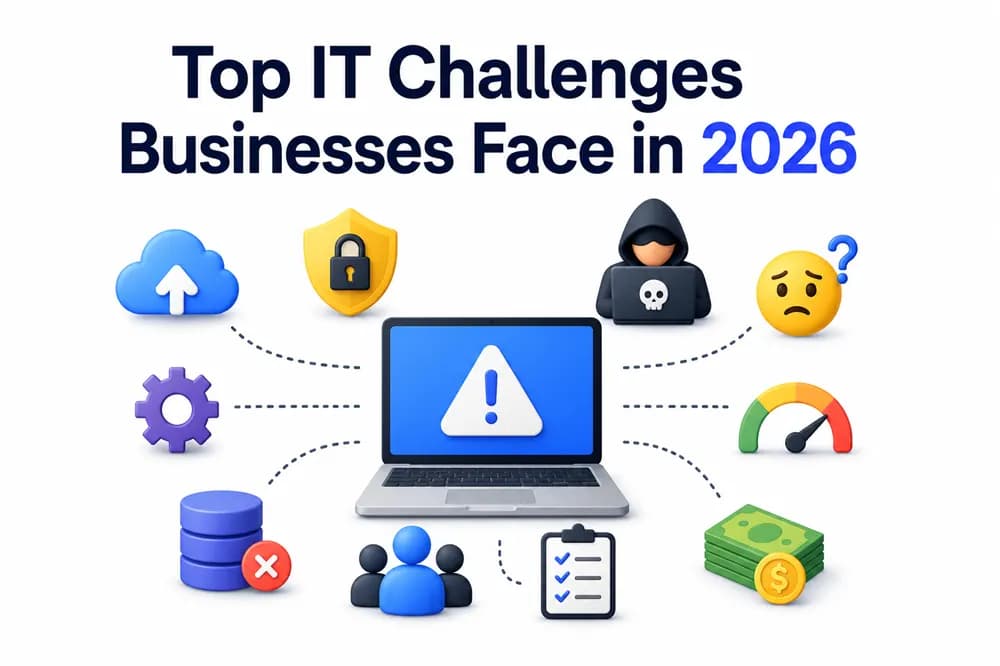
Technology is advancing at an unprecedent rate and opening up new possibilities and complexities for companies from across the world. Digital platforms, cloud computing, artificial intelligence, automation, and data analysis have become important tools in ensuring competitiveness. However, there are several IT issues brought about by the emergence of these advancements that are likely to affect organizations in one way or another. It has become increasingly difficult for companies of different sizes to cope with changes in the technological world while still being productive and efficient in their daily operations. In 2026, businesses are under increased pressure to embrace new technologies as they emerge while avoiding risks. Recognizing the most important IT issues that are affecting companies today is key to formulating solutions that can ensure business success in the long run.
Cybersecurity Threats Are Becoming More Sophisticated
Cybersecurity will continue to be among the major issues facing corporations in 2026. As companies advance their digitalization processes, criminals will develop ever-more sophisticated ways of hacking into systems and exploiting loopholes in order to gain access to sensitive information. Ransomware attacks, phishing attempts, cyber-attacks on cloud services, and other cybersecurity threats will increase in number and severity. In addition to protecting their IT infrastructures, corporations will be required to safeguard customer information, finances, and intellectual property. As more companies implement remote working and cloud computing models, security risks will multiply, making robust cybersecurity policies and practices even more necessary.
Managing Rapid Technological Change
Technologies develop more quickly than they have ever done before, making it hard for companies to keep up with the new innovations. It is important for companies to consider the potential of new technologies like artificial intelligence, machine learning, cloud computing, automation, and data analytics in order to see where technology can help make their processes easier and provide customers with better service. However, using new technology means investing heavily into training employees and upgrading the company infrastructure. It is difficult to understand what kind of innovations are going to benefit a business and which ones are going to be outdated soon.
Talent Shortages in the IT Industry
Recruiting and retaining IT professionals has emerged as a significant problem in many businesses today. The requirement for professionals specializing in cyber security, software development, cloud computing, artificial intelligence, and data science among others, always outstrips supply. With evolving technology, the need for very specialized workers to operate complicated systems has increased, hence creating competition for such professionals. Recruiting costs have gone up because of stiff competition, coupled with the increased time taken to hire staff. Some companies have opted to train their employees, work remotely, and collaborate with technology firms to combat talent scarcity.
Data Privacy and Regulatory Compliance
With increasing government laws for data protection, business entities now find themselves faced with challenges in adhering to various requirements. Firms collect large amounts of data from their clients and operations, which is why managing privacy becomes essential. Non-compliance can lead to hefty fines and reputation loss. Firms should ensure proper data management frameworks are put in place in order to adhere to laws and ensure proper management and accountability of data. Data management also poses greater challenges for firms operating in diverse areas with different laws.
Cloud Migration and Infrastructure Management
Cloud computing has become a crucial part of the operations of businesses in this age, although there are certain difficulties when it comes to the management of the cloud computing environment. Some companies are still working towards the migration of their legacy systems to cloud-based systems while ensuring business continuity is maintained throughout the process. Cloud migration entails planning, modernizing applications, securing the system, and optimizing for performance. Companies have to ensure that they develop cloud computing strategies that incorporate various technologies across several cloud computing providers. If companies lack governance, cloud expenses could escalate quickly.
Integrating Artificial Intelligence into Business Operations
AI technologies are changing various sectors of industry through increased efficiency, automation, and smarter decision-making processes. Yet, the process of deploying AI-based technologies does come with some difficulties. For example, organizations can encounter difficulties with the quality of data being used by AI, the process of integration, adoption issues, and even the ethics of using AI technologies. It is essential for an AI system to be provided with high-quality information, and organizations may encounter some difficulties there due to poor data quality or data silos within the company. Employees' reluctance to use new innovations may also pose a challenge for organizations.
For more: AI-Powered Logistics Software Development: The Future of Supply Chains
Protecting Against Data Loss and Downtime
The data that companies have access to is considered to be one of their key assets in terms of value, thus, data protection becomes an absolute must in 2026. There are several reasons why businesses may experience downtime due to hardware malfunctions, security threats, accidental human error, and natural disasters, which could lead to the loss of crucial data. Companies have to ensure that they have efficient backup and disaster recovery plans in place to maintain business continuity amid unexpected challenges. Downtime might become a costly issue for organizations working mostly in the digital sphere.
Managing Remote and Hybrid Work Environments
The adoption of the remote working paradigm presents certain difficulties for IT teams. It is necessary for enterprises to ensure their workers have a secure connection to apps, information, and communication tools no matter where they work from. This entails an investment into cloud computing services, virtual private network services, endpoint security products, and the ability to remotely assist staff members. Dealing with dispersed workforces brings certain complications in relation to measuring worker productivity, maintaining smooth communication channels, and ensuring adequate security measures are being employed.
For more: How AI Is Transforming Mobile App Development in 2026
Legacy System Modernization
Organizations have been found to use old and obsolete IT infrastructure that is hard to maintain, integrate, and manage. Such IT infrastructure fails to have compatibility with current technology solutions, making it difficult for the organizations to embrace innovation and expand their operations. The use of such legacy infrastructure may prove costly and pose security threats that could jeopardize the business operations. Modernization includes processes such as software upgrades, migration of applications, and redesigning IT architectures among others. Modernization may prove challenging, but it is critical for success.
Balancing Innovation with Budget Constraints
Corporations are continually facing challenges to innovate themselves even while working within a fixed budget and scarce resources. Technology plays a critical role in helping corporations grow and expand but they need to ensure that all technological investments will help them derive some value from the process. Innovation and budgeting require companies to be strategic in their planning process as they need to ensure that technological investments are aligned with business goals and are beneficial to their operations in the long run.
The Growing Importance of IT Support and Maintenance
With increasing complexity within technology ecosystems, there is an increased need for continuous IT support and maintenance. Businesses depend on their interrelated systems, cloud environments, software programs, and technology infrastructure to conduct their business activities. Failure could lead to decreased productivity, reduced customer satisfaction, and loss of potential income sources. Effective IT support involves proactive system monitoring, timely software upgrades, installation of security patches, and technical support. Organizations that adopt this IT support model are less likely to face technological challenges and enjoy consistent performance.
How Dinoustech Helps Businesses Overcome IT Challenges
To address current IT-related problems effectively, an organization needs to employ highly trained specialists, develop strategies, and invest in high-end technological advancements. That is what the experts at Dinoustech offer, helping you navigate the world of IT and grow sustainably in this space. With our Website Development services, we ensure your website will be both secure and scalable. Our Software Development services, on the other hand, ensure that you get custom applications built to your specifications. Innovative digital solutions come from our Mobile App Development and Full Stack Development offerings, allowing us to streamline processes and improve user experience even further. Moreover, through our Digital Marketing Services, we help you make sure you get the maximum benefits out of all your investments in IT.
Conclusion
The state of information technology by 2026 will bring new opportunities as well as challenges for companies seeking to survive in the fast-moving IT environment. Threats such as cybersecurity risks, lack of skilled labour, difficulties managing cloud technologies, need for compliance with various regulations, as well as constant evolution of technologies, will pose new challenges for organizations. However, through a proactive approach based on innovation and strategic thinking, companies will find it possible to overcome these issues. Those companies that will implement advanced technology solutions, develop their employees' skills and improve their IT systems will become more capable to respond to new challenges and gain success.