Dinoustech Private Limited
The Complete Software Development Lifecycle Explained
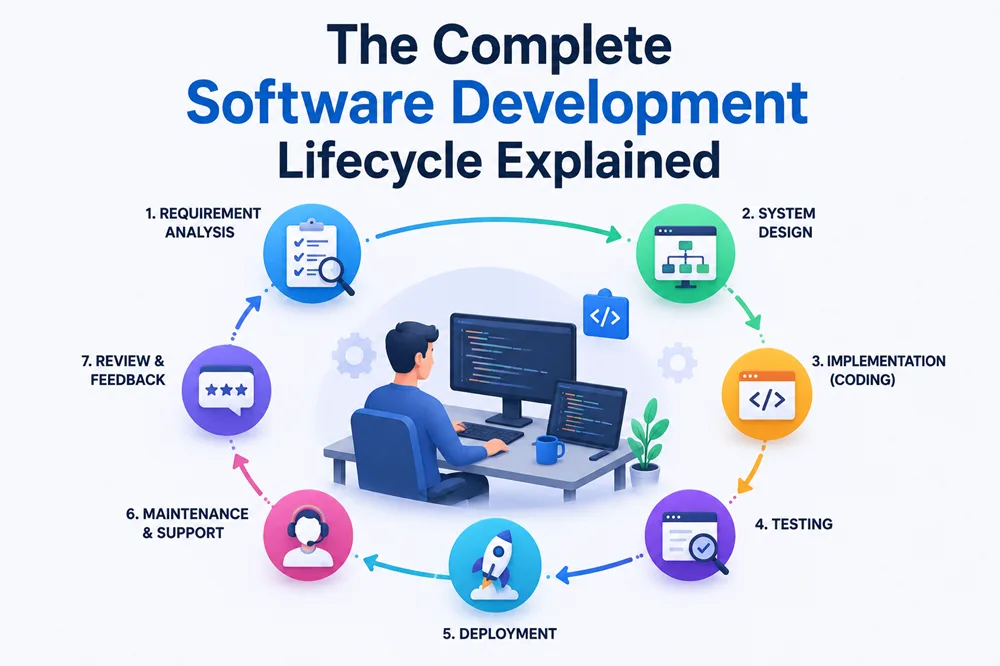
Modern business has come to depend on software development as its cornerstone in streamlining business processes, enhancing customer satisfaction, and fostering innovation. No matter whether it is an application, enterprise software, eCommerce software, or any other type of business software, each software product requires an organized approach to development, which is called Software Development Lifecycle (SDLC). An SDLC offers an effective framework for a software development project from idea to deployment and maintenance. Adhering to the software development lifecycle helps companies manage risks more effectively, produce higher-quality software products, decrease development expenses, and meet deadlines. Therefore, understanding all the stages of the software development lifecycle is critical for a business.
What Is the Software Development Lifecycle?
SDLC stands for Software Development Life Cycle, which is basically a systematic process that development teams utilize in planning, designing, developing, testing, deploying and maintaining applications. In the past, software creation was considered one process. However, with the advent of SDLC, the process of creating software is broken down into different phases to ensure that everything runs smoothly and that the final product meets all the required standards. Using SDLC is important for ensuring that everyone involved in the development process works in the same direction, from business owners to developers, designers, testers, and even end-users.
Planning and Requirement Analysis
Planning is the first phase which sets the base for the software development life cycle process. In the planning phase, enterprises establish the objectives of the project, requirement analysis, analyse the needs in the market, and establish the amount of resources needed for the development process. Planning is an important aspect that enables an organization to know the problem that the software will solve and the benefits it will bring to the users. The requirement analysis includes collection of information from different stakeholders, identification of functional and non-functional requirements, and establishment of expectations regarding the project.
Understanding Business Objectives
Before the development process starts, the company must establish what its business objectives are. This is because having an understanding of the business objectives will make it possible for the developers to come up with technical solutions that are aligned with the business needs and preferences. This could range from improved efficiency to revenue generation.
Defining User Requirements
User requirements are key factors in establishing how the software should function and be used. This is achieved by gathering relevant information through various methods such as interviews, surveys, research, and seminars where developers learn about the expectations of the users regarding the application.
For more: AI in Fantasy Sports Software Development: Future Trends
System Design and Architecture
When all the requirements have been agreed upon, it is time to design the software. At this point, all the aspects relating to architecture, structure, and usability need to be created. These would be used as guidelines for the development process. Technical design and specifications including databases, work flow, interfaces, and architecture are among the outputs of the design process. The importance of this process cannot be understated since this is where any potential problems can be identified, ensuring that performance requirements are achieved.
Software Development and Coding
The development stage is when all software concepts turn into reality. Software developers start coding using the specified design requirements and requirements for the project. With modern software development approaches, software can be developed using the agile approach and can evolve iteratively. In the development phase, software developers will be developing software features and implementing APIs and databases, and business logic. It is important for software developers to work collaboratively with other members such as designers and project managers in order to keep up with the project development requirements.
For more: Why Businesses Need a Logistics Software Development Company in 2026
Testing and Quality Assurance
One of the most critical stages in software development is testing, since this stage helps ensure the software functions as expected before it reaches end-users. Quality assurance engineers test the software’s performance, its functionality, security, usability, and compatibility on various platforms. Software testing plays an instrumental role in helping to detect potential problems that might affect users. Proper testing can significantly help in minimizing risks associated with operational issues as well as maintaining customers’ confidence in the software.
Functional and Performance Testing
The process of functional testing involves confirming the software functions properly as per the required specification and producing the expected results. On the other hand, performance testing ensures that the software performs well within various conditions such as large traffic and workload, among others.
Security Testing and Bug Resolution
As new forms of cyber threats emerge, it is important to conduct security testing. Security evaluations determine weaknesses that may allow sensitive information to be accessed by unauthorized users. Developers fix bugs and improve the application's security before making the software available to the users.
Deployment and Release Management
Once testing is successfully carried out, the software moves into the deployment phase. This phase entails providing the software to the users by deploying the software to production environments. Deployment methodologies differ from project to project, and the methods used could be phased deployment, cloud deployment, among others. Proper release management ensures that the software is deployed without hitches. It is crucial for organizations to ensure that deployment activities are properly monitored and that the systems are working perfectly post-deployment. Deployment of software is a significant step in software development but not the last one.
Ongoing Maintenance and Support
Maintenance is required by software on an ongoing basis for it to continue being efficient and secure. With technological advancement and changing user expectations, there will always be a need to update applications to meet the new demands and security threats as well as to enhance their performance. The maintenance process involves fixing bugs, updating the software, adding features, and optimizing the supporting infrastructure.
The Role of Agile Methodology in Modern Software Development
Agile methodology is arguably one of the most popular methodologies used in the software development process. This is due to the fact that agile methodology is flexible as opposed to conventional development methodologies that use rigid procedures in software development. The development team undertakes the development process in sprints where they can improve the software in small steps. Agile increases transparency and enables the participation of stakeholders in the process.
Common Challenges in the Software Development Lifecycle
However, despite the systematic nature of the process, several difficulties may arise when going through the software development life cycle. Inadequate requirements, poor communication, unrealistic schedules, scope change, and lack of adequate testing are just some of the possible issues that might negatively affect the results of the project. Apart from that, the problem with security, problems with system integration, and changing customer demands may also become obstacles on the way to success. Therefore, addressing these difficulties is a key to success.
How Dinoustech Supports the Software Development Lifecycle
At Dinoustech, we are aware of the fact that software development is not only about technical skills. Our Software Development Services include all the phases of the Software Development Life Cycle, including Planning, System Design, Development, Testing, Deployment, and Maintenance. Furthermore, our website development services, mobile app development services, full stack development services, and digital marketing services assist businesses in developing a complete suite of digital solutions for their specific needs. By utilizing cutting-edge technologies and agile techniques, Dinoustech assists organizations in achieving fast-paced digital transformation.
Conclusion
The Software Development Life Cycle is an effective structure, which allows companies to turn their ideas into efficient, scalable, and successful software. In all stages, from requirement analysis and planning to implementation and maintenance, there are many activities, which should be carried out in order to assure high software performance. Adhering to an appropriate SDLC, a company is likely to minimize development risks and improve teamwork to ensure successful implementation of the product, which will definitely satisfy all the customers' needs and requirements. In view of technological development and improvement of contemporary development techniques, it is essential to collaborate with a professional provider of technologies. That is why at Dinoustech, we offer our assistance during any software development stage.