Dinoustech Private Limited
Stock Trading App Development for Startups and Enterprises
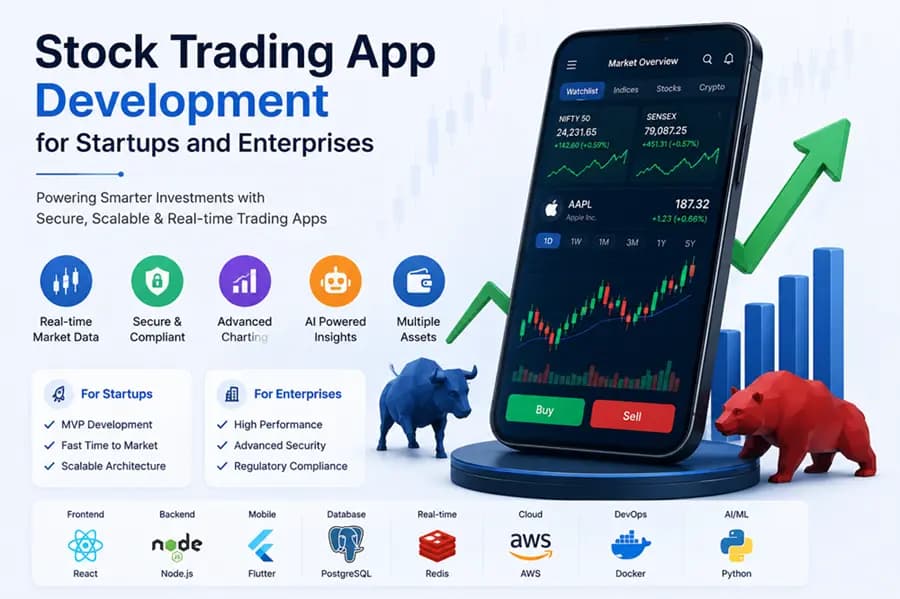
Stock trading apps have changed how people invest. Before, trading was hard and only for a few skilled investors. Now, anyone with a smartphone can watch markets, buy stocks, sell shares, and manage their investments easily. This change has led to a high demand for stock trading apps, especially in India, where mobile finance products are growing quickly.
For new businesses, this market is a good chance to grow. For bigger companies, it helps to update services, keep customers, and create new online income. But making a trading app is different from making a regular app. It needs strong security, fast speed, reliable data, a simple user experience, and must follow rules from the start. A small mistake can hurt user trust, trading accuracy, and the brand's image.
In this blog, we will explain the whole process of making stock trading apps for new and big businesses. We will discuss market trends, key features, technology used, development steps, costs, common problems, future trends, and why businesses want skilled trading app developers. We will also talk about why making trading apps in India is a good choice for companies that want quality, speed, and cost control.
Market Overview and Industry Trends in India
The Indian stock market has grown a lot in retail participation in recent years. More people are investing using mobile apps, digital payments, and following market news on their phones. This change has made trading apps common for many users, not just for experienced investors. The rise of UPI, better internet access, and stronger digital habits have helped companies create financial products that reach more people.
Startups in India are creating products for beginners, active traders, and long-term investors. Established companies are also improving their digital services by launching better mobile apps, adding smart insights, and making trading easier. This is why trading app development in India is growing for both new and old businesses. The market is now about giving users a full investing experience that is fast, informative, and trustworthy.
Several trends are shaping the industry now. More apps offer real-time stock alerts, watchlists, portfolio summaries, advanced charts, and in-app learning tools. Some products use AI to help users find patterns or get personalized suggestions. Security is also a bigger focus, as users want their financial data to be safe. As competition increases, companies need trading apps that do more than just buying and selling. They need products that help users make better decisions and keep coming back.
Also Read: - Top 6 Fintech App Development Companies in India for 2026
What Is Stock Trading App Development?
Stock trading app development means creating a mobile or web app that lets people trade stocks, watch markets, check their investments, and manage money in real time. These apps connect to brokerage systems, market data, and secure payment tools. In simple terms, the app links users to the stock market.
A good trading app can show live prices, let users place orders, analyze portfolios, manage accounts, send notifications, and provide research tools. More advanced apps might have watchlists, charts, order history, learning materials, news updates, IPO tracking, and AI suggestions. The main goal is to make trading easier, faster, and safer for users on their phones or computers.
For new companies, the app might start with a simple idea, like an easy investing app or a special tool for a certain group. For larger companies, the app needs to support more users, offer more features, connect deeply with other systems, and follow strict rules. In both cases, the app must be reliable because it deals with money and user trust.
Why Stock Trading Apps Matter for Startups and Enterprises
A trading app is more than just a digital tool. It is an important part of a business. For new companies, it helps connect with users and stand out in a busy finance market. It also lets the business start quickly, test what users want, and improve the app based on real use. Many new companies choose to grow through apps because it gives them control over how the product works, customer information, and how they make money.
For larger companies, the benefits are different but still strong. A trading app can help keep customers engaged, lower support needs, and update old financial systems. It can also help keep current customers who want mobile access and easy online processes. In a market where customers look at speed, features, and trust, a good mobile trading app can really help.
This is why having skilled app developers is important. A good team knows how to build the app and understands market trends, financial processes, and what users expect for security in finance. This knowledge is crucial when the app deals with sensitive transactions and real-time market changes.
Must Read: - From Concept to Code: Building High-Performing Fintech Apps
Core Features of a High-Quality Trading App
A stock trading app should look simply, even if it is complex inside. Users care about how quickly the app works, if the data is correct, and if they can place orders easily. So, the app must be easy to use and functional.
The most important part is a simple login and sign-up process. Users should sign up, verify who they are, and get into their account without problems. Once they are in, they should see a clear dashboard with watchlists, portfolio value, market news, and active trades. Live market data is also important so users have the latest information before making decisions.
Placing orders is another key feature. The app should allow market orders, limit orders, stop-loss, and other common trades based on the business model. Tracking portfolios, viewing transaction history, and seeing gains or losses are also important for users to stay in control. Notifications, charts, market alerts, and custom filters can help keep users engaged and using the app more.
For many businesses, extra features can add more value. These might include AI insights, news updates, personalized investment tips, support in different languages, and learning materials for new users. Larger companies may also need tools for managing branches, admin dashboards, CRM integration, and API controls. The exact features depend on the target market, business goals, and budget, but the app should always feel fast, safe, and easy to use.
Stock Trading App Development Process
The development process usually starts with research and planning. The business team decides who the audience is, what the product goals are, how to make money, and what legal needs there are. This step is very important for trading apps because they may need partnerships with brokers, data feeds, and special security features. A good plan helps lower risks later and keeps the project on track.
Next is UI and UX design. Trading apps show numbers, charts, and market changes, so the design must be clear and useful. Users should not feel overwhelmed when they open the app. They should quickly understand the dashboard, find what they need, and move around easily. Good design helps both new and experienced traders.
Development happens in stages. The backend team creates the systems that handle accounts, data, orders, market feeds, security, and admin controls. The frontend team builds the screens users see on mobile or web. If the app uses outside services for charts, trading, identity checks, or notifications, those are added during development too. Testing is very important because financial apps cannot have big problems. After testing, the app is launched, watched, and improved with updates.
Also Read: - Best Fintech App Development Company in India for Digital Payment Solutions
Technology Stack for Stock Trading App Development
The right technology depends on the app's size, security needs, and how it works. For the front end, many teams use React Native or Flutter to build apps for both Android and iOS from one codebase. Some choose to use Swift for iOS and Kotlin for Android when they need better control or performance.
On the back end, common choices are Node.js, Java, Python, and .NET. These help manage real-time data, user sessions, secure transactions, and business rules. Teams often use databases like PostgreSQL, MySQL, and MongoDB to store user data, market records, and transaction logs. Cloud services from AWS, Google Cloud, or Azure help with growth and reliability.
Trading apps rely on outside services too. They use market data APIs, KYC systems, authentication tools, payment services, SMS gateways, and analytics platforms. Security tools like encryption, multi-factor authentication, role-based access, and fraud monitoring should be included from the start, not added later.
Cost Breakdown for Stock Trading App Development
The cost to make a stock trading app depends on its size and features. A simple app with basic functions costs less because it has fewer screens and takes less time to build. A more advanced app with live charts and tools costs more. A top-level trading platform with complex features needs a bigger budget.
Several things affect the cost. First is the app's scope. A simple app for new investors is cheaper than a full trading system. Second is design quality. A good financial app needs careful design so users can trust it. Third is integration. Adding systems for identity checks, market data, payments, and rules takes more work. Fourth is testing and support. Financial apps need regular checks, not just one launch.
Businesses should also think about costs after launch. These include hosting, using APIs, maintenance, security updates, tools for analytics, and adding new features. A trading app is never truly finished after launch. The market, user needs, and rules can change. A smart budget should allow for this ongoing work.
Must Read: - Top FinTech Trends that Will Take Place in 2026
Common Challenges and How to Solve Them
Building a trading app is not just about coding features. It also involves dealing with technical and business risks. One major challenge is data accuracy. Users rely on the app for live market information, so any delay or mismatch can create problems. The solution is to use trusted data sources, strong backend architecture, and proper testing before launch.
Another challenge is security. Trading apps handle personal data, financial activity, and sensitive account information. That means the app must include secure login, encryption, token-based access, device protection, and fraud checks. Security cannot be treated as a late-stage task because the risks are too high.
User experience is another area where many apps struggle. Trading platforms often become cluttered because teams try to show too much information at once. The result is confusion. A better approach is to separate essential actions from advanced tools and keep the interface calm and readable. Users should be able to check their portfolio, place a trade, and view trends without extra effort.
Compliance can also create delays. In India, fintech products often need to consider regulatory requirements, data rules, and process constraints depending on the business model. That is why it helps to work with teams that understand financial product development and not just general app coding. Experienced trading app developers can plan these details early and avoid problems later.
Future Trends in Trading App Development
The future of trading apps in India looks promising. AI is already changing how users interact with market data. Instead of just showing charts, apps can now help users understand trends, compare options, and receive personalized recommendations. This makes the platform more useful and keeps users engaged for longer periods.
Voice-based actions may also become more common. Users might check holdings, see market updates, or place simple commands using voice assistance. Personalization will continue to grow too. Future apps will likely show content based on user goals, risk appetite, and behavior patterns. That can help both beginners and active traders.
We will also see more focus on education inside trading apps. New users often leave because they feel overwhelmed. Apps that include tutorials, market explainers, and simple learning tools can reduce that problem. Another trend is better integration across financial products. Users may want their trading app to connect with banking, investment, and tax tools in one place. That creates a more complete financial experience.
For businesses planning trading app development in India, these trends matter because they affect product strategy. A trading app should not only work well today. It should also stay relevant as user expectations move forward.
Why Choose Dinoustech for Stock Trading App Development?
Dinoustech is a Jaipur-based mobile app and software development company that builds digital products for startups and enterprises. Our team works across mobile app development, web development, SaaS development, AI app development, and custom software solutions. That broad experience helps us understand how different industries work and how to build products that solve real business problems.
When we approach stock trading app development, we focus on product structure, user trust, system reliability, and long-term scalability. We understand that financial apps need clean design, strong backend logic, and careful planning from the start. We also understand that different clients have different goals. A startup may need an MVP to validate demand quickly. An enterprise may need a larger platform with advanced workflows and integration layers. Our process adapts to both.
We do not treat fintech apps like ordinary apps. We look at the full product journey, from user onboarding to order management and post-launch support. That is why businesses looking for experienced trading app developers often look for teams that can balance technical strength with practical product thinking. That balance is where Dinoustech adds value.
Conclusion
Stock trading app development is a strong business move for startups and enterprises in India. The market is growing, users expect better digital investing tools, and mobile-first financial behavior is now normal for many investors. But a successful trading app needs more than good visuals. It needs secure architecture, real-time data, smooth workflows, strong UX, and a clear business model.
For startups, the app can help create a fast and focused entry into the fintech space. For enterprises, it can improve customer engagement and modernize service delivery. In both cases, the right development partner matters. A skilled team can reduce risk, speed up delivery, and build a product that users trust.
If your goal is to enter the market with a reliable, scalable, and user-friendly product, now is the right time to plan. Trading app development in India is moving fast, and businesses that build with clarity and discipline will have the best chance to grow.
FAQs
1. How long does stock trading app development take?
The timeline depends on the app’s scope. A basic MVP may take a few months, while a more advanced trading platform can take much longer because of design, integrations, testing, and security work.
2. What features should a trading app include?
A trading app should include login, onboarding, live market data, watchlists, order placement, portfolio tracking, alerts, and a secure account management system.
3. Is India a good place for trading app development?
Yes. India has strong technical talent, a growing fintech market, and a large base of mobile users, which makes it a practical location for product development.
4. Why is security so important in a stock trading app?
Trading apps handle financial and personal data, so security protects users from fraud, data leaks, and unauthorized access.
5. Can startups build a trading app with a limited budget?
Yes. Many startups begin with an MVP that includes only the most important features, then add more functions after validating the idea.