Dinoustech Private Limited
Best Free Intermittent Fasting App for Weight Loss
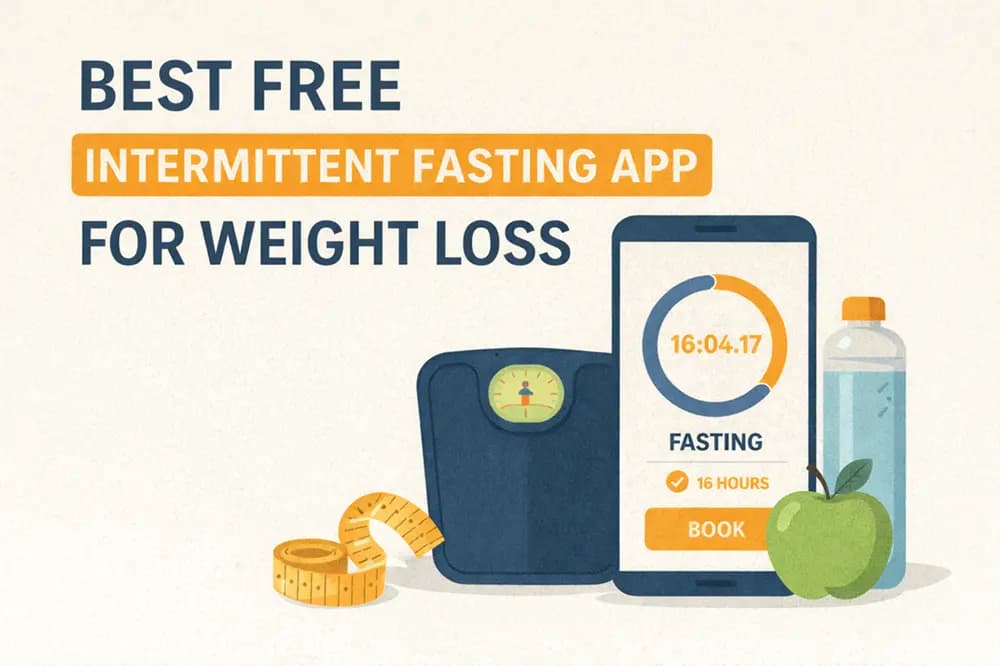
Intermittent fasting has become a mainstream approach for weight loss and metabolic health, and the market for fasting apps has matured accordingly: modern fasting apps combine timers, habit coaching, food logging, hydration tracking and community features into compact, mobile-first experiences that help people form sustainable routines. For many users the app is the accountability system — a gentle timer, a streak tracker, and a place to reflect on mood and hunger signals — that turns a good intention into a habit. The best free intermittent fasting apps give accurate timers and actionable insights without immediately pushing paywalls, making them perfect first steps for people who want to try fasting without a big upfront cost. Recent roundups and editorials that compare the top free options confirm that a handful of apps consistently rise to the top for reliability, usability and features.
Why a fasting app can help you lose weight
A good fasting app does three practical things for weight-loss seekers: it reduces friction around tracking fasting windows, so people don't forget or cheat the plan, it turns abstract streaks into visible momentum that encourages adherence, and it provides context for eating patterns via simple food or mood logs. For weight loss, consistency matters more than the precise fasting window, and an app that encourages repeated adherence — through streaks, reminders, and short-form explanations of why fasting works — typically delivers better outcomes than unaided attempts. Many apps also integrate light educational content about protein, hydration, sleep and stress, because fasting is not just a time-bound behavior; it interacts with other lifestyle factors that influence body composition and energy. Editors and health writers who test the apps often note that the psychological lift of a clear streak and simple completion UI is one of the strongest drivers of long-term adherence.
Also Read: - The Future of Fitness Apps: Insights from a Leading Development Company
Top free fasting apps people use today
The modern fasting app landscape has a few clear leaders alongside several specialized tools that serve journaling, coaching, or quick-timer needs. The following profile set covers the top seven apps’ users mention most often, with attention to what each app does best and why someone trying to lose weight should consider it. For lists of top free apps in 2026, industry roundups repeatedly include these names as the most popular choices for both beginners and experienced fasters.
Zero
Zero has become a go-to fasting timer and education hub because it combines a clear, fast timer UI with science-forward content and optional advanced programs for users who want coaching. The app is built for people who care about data: it records fasting windows, tracks trends over time, and layers guidance about protein intake and preservation of lean mass so users don’t simply lose weight but aim to preserve muscle. For weight loss, the combination of an elegant, reminder-driven interface and evidence-oriented guidance helps users stay consistent without overcomplication; many reviewers appreciate that Zero’s free tier is generous enough to form lasting habits before users consider upgrades to paid programs.
Zero’s attention to clarity — explaining what a fasting window does biologically in short, accessible blurbs — reduces the confusion that often causes people to abandon fasting. The app also supports timers that are forgiving and human-centred, providing a sense of progress rather than strict policing. Because many people trying to lose weight are new to time-restricted eating, this emphasis on education plus simple tracking makes Zero a top recommendation in many editorial roundups and user lists.
Life Fasting Tracker
Life Fasting Tracker (often presented simply as LIFE) is appealing because it blends the fasting timer with a community sense and metabolic health metrics. The app supports group challenges and allows users to connect with friends, which can be a powerful motivator for people who enjoy friendly accountability. It also emphasizes trend reporting so users can spot correlations between fasting consistency and weight or mood changes; this makes it a useful tool for people focused on weight-loss experiments and behavior change over months.
For weight loss, the social hooks and simple visualizations help maintain engagement during the inevitable plateaus that follow early progress. Life Fasting Tracker balances a clean UI with useful summary graphs that show how streaks and fasting adherence relate to bodyweight trends, which is the kind of insight that transforms sporadic attempts into reliable routines.
Fastient
Fastient is popular among users who pair fasting with journaling: it provides an easy way to log symptoms, mood, sleep and notes about meals while also offering clean visualizations of fasting progress. Many people find that writing short reflections about hunger signals, cravings, and energy patterns helps them learn what works across different fasting windows; pairing that qualitative data with the fasting clock helps optimize timing for both adherence and weight loss.
A journal-centric approach appeals to people who want to learn from their experience rather than follow prescriptive programs. Fastient’s strength for weight-loss seekers is the way it encourages reflection and learning — rather than mechanical streak-keeping — enabling users to refine their fasting windows in response to real signals from their body and environment.
Fastic
Fastic offers a strong mix of habit nudges and optional coaching content layered on top of a reliable fasting timer. For people who respond to daily micro-challenges and brief coaching prompts, the app’s behavioural design can be highly motivating. Even in the free version, Fastic provides time windows, streaks and simple hydration tracking that support weight loss through consistent adherence.
Where Fastic often stands out in reviews is its focus on habit psychology: small, daily nudges (drink water, take a short walk, get protein) that complement fasting and make the overall program more sustainable. Users trying to lose weight often benefit from that integrated nudge system because fasting alone is easier when combined with small, repeatable actions that positively influence appetite and energy balance.
DoFasting
DoFasting is geared toward beginners who want a structured introduction to intermittent fasting and light educational content about what to eat during eating windows. The app pairs a reliable timer with meal ideas and basic fitness tips so someone new to fasting can start with a plan rather than inventing one. For weight loss, clear early wins are important — people need to see progress quickly to maintain motivation — and DoFasting’s structured approach helps many novices make that first leap.
DoFasting also offers simple reporting dashboards that show cumulative fasting time and weigh-ins, which helps people evaluate whether the approach aligns with their goals. While advanced users sometimes find structured beginner plans restrictive, many who start here graduate to more flexible regimes and keep the habit because the initial coaching created a stable foundation.
BodyFast
BodyFast blends a free fasting timer with coach-guided weekly challenges that nudge users into increasingly consistent behaviours. For people using fasting as a weight-loss tool, the weekly coach model helps remove ambiguity about which fasting window to choose and how to progress as comfort with the routine increases. The social proof of weekly challenges — seeing other users complete the same habits — increases stickiness and the psychological momentum that research shows matters for long-term adherence.
What sets BodyFast apart is the gradualism: instead of pushing a large calorie deficit or extreme fasting protocol right away, the coach model suggests manageable progressions and celebrates incremental wins. That makes it more suitable for users who worry that strict dieting and fasting will be overly restrictive.
AteMate Food Journal
Ate is not a fasting timer first, but its visual food diary approach pairs exceptionally well with intermittent fasting because it encourages awareness about what happens in the eating window. Users photograph meals and add quick notes, creating a visual habit that reduces mindless snacking and encourages better meal composition during eating windows. For weight loss, the combination of time-restricted eating plus improved meal choices often produces better results than either intervention alone.
Ate’s value is in its gentle, reflective nudges rather than prescriptive meal plans: users learn to notice triggers and situational cues that lead to overeating. When used in tandem with a fasting timer, the app can reduce accidental overconsumption during the eating window and help preserve the calorie deficit that drives weight loss.
Must Read: - How Much Does It Cost to Develop a Fitness App?
How to pick the best free fasting app for your weight-loss goals
Choosing the right fasting app depends on whether you want coaching, social accountability, journaling or a simple timer. For beginners a guided app with weekly challenges (like BodyFast or DoFasting) reduces decision fatigue and increases consistency; for people who want to experiment and learn, a journaling approach (Fastient or Ate) helps surface personal patterns that matter. If you already know your preferred fasting window and want a lightweight tracker, minimal apps like Vora or FastHabit remove friction and keep you focused on the core behaviour. Across all choices, look for apps that offer durable free timers, the ability to export or view fasting history, and minimal aggressive up-sell tactics; those three features separate genuinely helpful apps from those built primarily to convert users to subscriptions. Editor and consumer pieces that compare apps show these categories repeatedly, which is why users often pick an app based on fit rather than raw features.
Building a fasting app
If you’re building a fasting product or hiring a fasting app development team, the product lessons are clear: keep the timer reliable and visible, make streaks and history the emotional core of the UX, and ensure data portability so users can export their history if they leave. For clinical or healthcare-adjacent aspirations, partner with a healthcare app development company to design evidence-based content and appropriate clinical disclaimers; compliance and data privacy matter when apps start collecting health signals and weight trends. For user retention, invest in tiny habit nudges and progressive personalization rather than heavy-handed monetization in the early weeks — habit formation precedes monetization. Teams that embed this product tenets build apps that people actually keep using after the novelty wears off.
Technical considerations
From an engineering perspective, the typical fasting app requires reliable background timers, safe local state for offline usage, and modest server work for optional syncing or community features. If you want broad reach quickly, a cross-platform approach that reuses business logic across iOS and Android accelerates delivery, but certain platform integrations — like health-kit syncing on Apple devices — still benefit from native implementations, so an iOS app development and android app development roadmap should be part of the scoping process. When building with a small team, focus first on a durable offline timer and a resilient sync mechanism; network instability is where many habit apps break trust because missing or duplicated fast logs frustrate users. If you’re choosing a developer, a mobile app development company with experience in low-power background processing and data sync will help you avoid these pitfalls. For health-grade features — e.g., integrating with medical records or providing clinical guidance — bring in a healthcare app development company early to ensure regulatory requirements are met. Finally, if you want to move quickly without sacrificing quality, engaging an expert software development company streamlines the path from prototype to product and helps you make pragmatic infrastructure choices.
Why partner with an app development specialist
Choosing the right development partner matters because early architecture decisions shape product experience and long-term cost: ledgered event stores for fast history, soft deletes for privacy controls, and clear export features make a product trustworthy and simple to maintain. For teams that want to build an effective, privacy-respecting fasting app, working with a focused fasting app development company helps you translate user psychology into product rituals — the small micro-interactions that create a sense of progress every day. If your product intends to integrate clinical features or launch in medically sensitive markets, working with a healthcare app development company ensures you have the compliance framing and documentation necessary for regulators and partners.
If you need cross-platform speed and native polish, a full-stack approach that combines iOS app development and android app development expertise is often the fastest route to a polished MVP. As a final note, partnering with a robust mobile app development company reduces the common engineering pitfalls around background tasks and data sync, while an expert software development company brings the product discipline needed to design retention funnels that really work. For teams exploring this path, Dinoustech offers product discovery, prototype delivery and a phased roadmap to launch a fasting app that people use and recommend.