Dinoustech Private Limited
Ayurvedic Medicine App Development: Features, Cost & Tech Stack
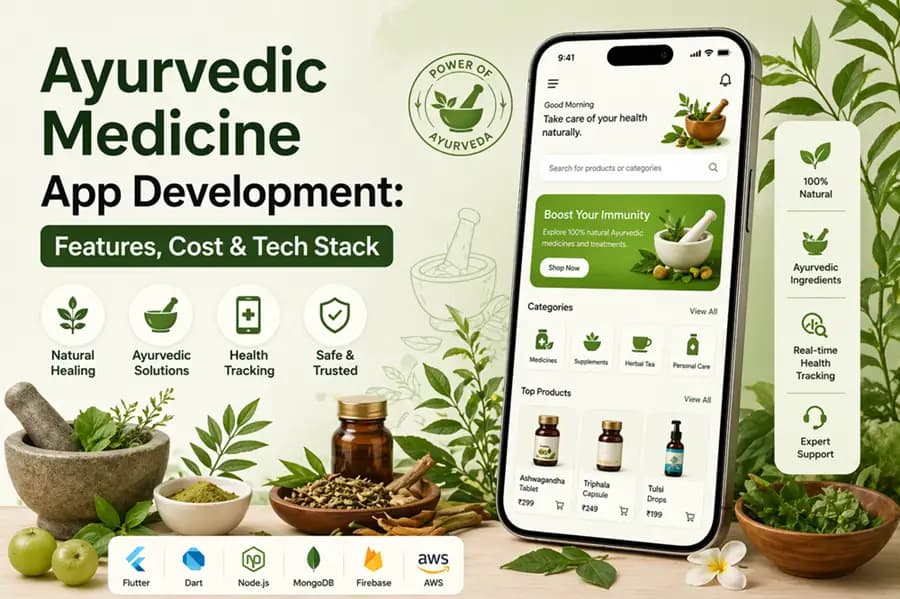
Ayurveda has moved far beyond being a local wellness choice. Today, users expect fast ordering, expert guidance, doorstep delivery, and a smooth digital experience. That is why Ayurvedic medicine app development has become a strong business idea for startups, pharmacies, wellness brands, and healthcare companies.
A well-built Ayurvedic app can do more than sell products. It can help users consult experts, upload prescriptions, track orders, manage repeat purchases, and build trust around natural healthcare. For businesses, this creates a direct channel to customers and opens new revenue opportunities.
At Dinoustech, we see strong potential in apps that combine wellness, convenience, and compliance. The right product can serve both regular buyers and people who need guided Ayurvedic care.
Why build an Ayurvedic medicine app?
An Ayurvedic medicine app solves a clear user need. People do not just want to browse products. They want help choosing the right remedy, confidence in product quality, and a simple way to reorder medicines later.
This model works well because it brings together three things:
First, convenience. Users can order medicines from home without visiting multiple stores.
Second, trust. They can see product details, doctor guidance, and prescription support in one place.
Third, repeat business. Ayurveda is often tied to long-term wellness routines, which means better retention for the business.
For brands, the app also makes inventory management, customer communication, and loyalty programs much easier.
Core features your Ayurvedic app should have
A good app should feel simple on the surface and smart behind the scenes. The features depend on your business model, but most successful apps include the following.
1. User registration and profile
Users should be able to sign up with mobile number, email, or social login. They should also be able to save health preferences, addresses, and past orders.
2. Product catalog
The app should show Ayurvedic medicines, herbs, supplements, oils, tonics, and wellness products in a clean catalog. Each product page should include ingredients, usage, benefits, dosage guidance, and reviews.
3. Search and filters
People should be able to search by ailment, brand, ingredient, price, and product type. Strong filters improve browsing and reduce drop-offs.
4. Prescription upload
If you plan to sell prescription-based Ayurvedic medicines, users should be able to upload a doctor’s prescription easily. A secure verification flow is important here.
5. Online consultation
Many Ayurvedic buyers need advice before they place an order. The app can include video consultation, chat consultation, or appointment booking with certified practitioners.
6. Order tracking
Users should be able to track order status from confirmation to delivery. Real-time tracking improves trust and reduces support calls.
7. Secure payments
Your app should support UPI, debit card, credit card, net banking, wallets, and COD where needed. Payments must be safe and fast.
8. Notifications
Push notifications help with order updates, medicine refills, new offers, consultation reminders, and health tips.
9. Ratings and reviews
Reviews help users compare products and build confidence before purchase.
10. Admin panel
Your business team needs a dashboard to manage products, orders, payments, users, prescriptions, offers, and reports.
Advanced features that improve the app
Once the basic version is ready, you can add features that make the app more useful and stickier.
A repeat order button helps users reorder common medicines quickly.
A medicine reminder system can support daily wellness routines.
A loyalty program can keep users coming back.
A subscription model can work well for recurring herbal supplements.
A personalized recommendation engine can suggest products based on user history.
A multilingual interface can help you reach a wider audience across India.
A pharmacist or expert chatbot can answer common queries and improve response time.
These features are not mandatory for the first version, but they can make your app stronger over time.
Suggested tech stack for Ayurvedic medicine app development
The right tech stack depends on your budget, timeline, and growth plans. A practical stack often looks like this.
Frontend
For mobile apps, Flutter or React Native is a smart choice if you want one codebase for Android and iOS.
For web dashboards, React.js is a solid option.
Backend
Node.js with Express works well for fast development and API-driven apps.
For larger systems, you can also use Python, PHP, or Java depending on your team’s skill set.
Database
MongoDB is useful for flexible product and user data.
PostgreSQL works well if you want structured data and strong reporting.
Cloud and hosting
AWS, Google Cloud, or Azure can support scaling, storage, backups, and security.
Payments
Razorpay, Stripe, or PayPal can be used for online transactions, depending on your market.
Messaging and alerts
Firebase Cloud Messaging, Twilio, or similar services can handle OTPs, push notifications, and SMS alerts.
Video consultation
You can integrate WebRTC, Agora, or a similar API for live sessions.
Analytics
Google Analytics, Mixpanel, or a custom reporting layer can help you track orders, retention, and conversion.
Security
Use SSL, role-based access, encrypted APIs, secure authentication, and audit logs. If your app stores health-related data or handles prescriptions, security must be part of the first build, not an afterthought.
How much does Ayurvedic medicine app development cost?
There is no single fixed cost. The price depends on how simple or advanced you want the app to be.
A basic version with product listing, cart, payment, and order tracking will cost much less than a full platform with doctor consultation, prescription management, subscriptions, multilingual support, and advanced analytics.
Here are the main cost drivers:
The number of features you include
The number of user roles, such as customer, doctor, delivery partner, and admin
The design quality of the app
The number of platforms you want to launch on
Third-party integrations
Compliance and security requirements
Testing and post-launch support
A lean MVP is the best place to start if you want to validate demand first. A more advanced app makes sense when you already have pharmacy partners, consultants, or an active customer base.
Development process: how to build the app
A clear process saves time and prevents rework.
Step 1: Define the business model
Decide whether your app will focus on medicine delivery, consultations, subscriptions, or all three.
Step 2: Finalize the feature list
Start with the must-have features. Do not overload the first version.
Step 3: Design the user flow
Keep navigation simple. Users should reach products, consultations, and checkout without confusion.
Step 4: Build the backend
Create secure APIs, databases, and admin tools before moving to the UI polish.
Step 5: Develop the mobile app
Build the Android and iOS app with a clean interface and fast performance.
Step 6: Test everything
Test the app for speed, payment flow, login issues, prescription upload, and order tracking.
Step 7: Launch and improve
After launch, study user behavior and improve the app with real data.
Common challenges in Ayurvedic app development
This kind of app has a few specific challenges.
The first is trust. Users want authentic products, verified sellers, and clear product information.
The second is compliance. Prescription-based flows must be handled carefully.
The third is usability. Many users are not looking for a complex healthcare platform. They want a simple way to order and get guidance.
The fourth is retention. You need repeat orders, reminders, and useful content to keep users active.
These challenges are manageable when you plan the product properly from the start.
Why choose Dinoustech for Ayurvedic medicine app development?
Dinoustech builds custom digital products that are practical, scalable, and easy to use. For Ayurvedic medicine apps, the focus should be on clean UI, secure architecture, smooth ordering, and features that support repeat business.
Our team can help with:
Custom app strategy
UI/UX design
Android and iOS development
Admin dashboard development
API integration
Payment setup
QA testing and launch support
We do not treat this as a generic eCommerce app. An Ayurvedic platform needs better trust signals, smarter product flows, and a structure that supports both wellness and commerce.
Final thoughts
Ayurvedic medicine app development is a strong move for brands that want to serve modern customers without losing the value of traditional care. The winning app is not the one with the most features. It is the one that feels simple, trusted, and useful every time the user opens it.
If you want to build an app in this space, start with a focused MVP, choose a reliable tech stack, and keep the user journey clean from search to checkout.
FAQs
How long does it take to build an Ayurvedic medicine app?
The timeline depends on the feature set. A basic version can be built faster, while a larger platform with consultations and advanced workflows takes longer.
Can the app support both medicines and consultations?
Yes. That is one of the best ways to make the app more useful and increase customer trust.
Is Flutter a good choice for this app?
Yes. Flutter is a strong option when you want Android and iOS apps from one codebase.
Do I need an admin panel?
Yes. Without an admin panel, it becomes hard to manage products, prescriptions, users, and orders.