Dinoustech Private Limited
Build a Kissht-Style Instant Loan App with an Expert Development Company
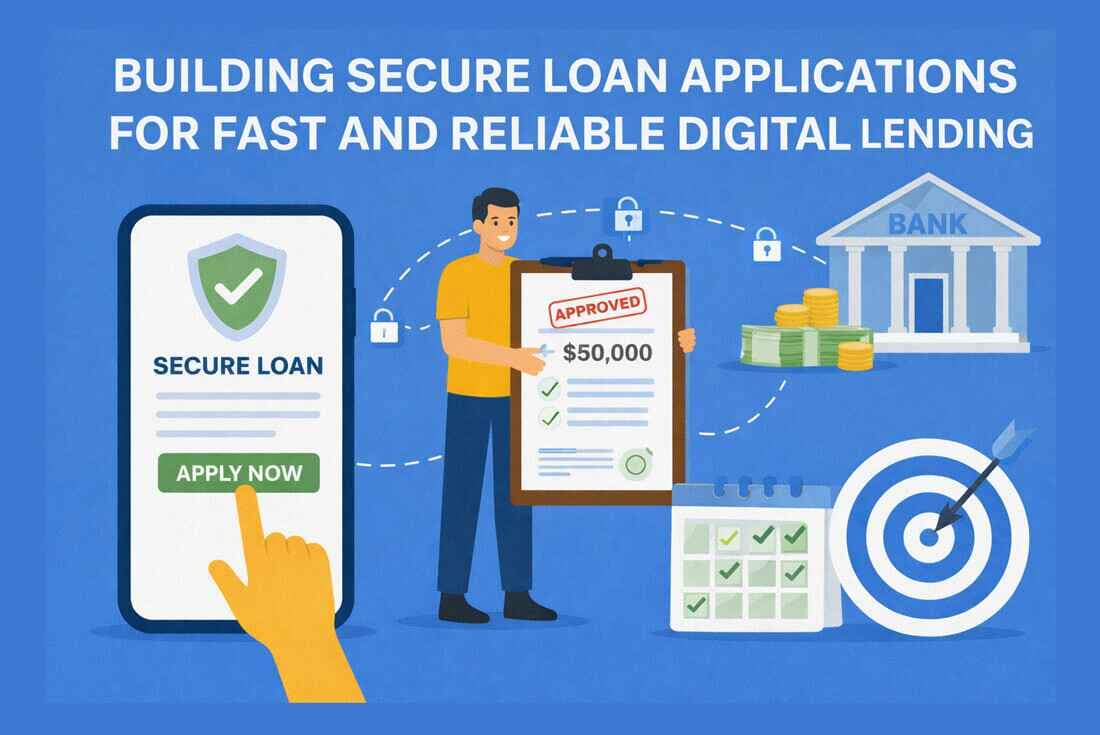
The instant credit app has completely changed the face of consumer finance, as instant underwriting, seamless onboarding, and immediate disbursal of funds has shifted small-ticket, short-term loans from the branch to the customer’s mobile. Creating an app like the leaders in the space requires more than just copying screens, as it requires product thinking, compliant underwriting, effective risk management, and operational tooling that keeps the money flowing without hiccups. For organizations looking to provide responsible instant credit solutions while growing rapidly, a thoughtful approach to product definition, architecture, and vendor choice is the difference between a brittle pilot and a sound financial service. This article will outline what an instant loan app like Kissht looks like, the features you should focus on, the engineering and compliance practices that safeguard your balance sheet, and how Dinoustech, with its product-focused engineering philosophy, can help your teams ship a production-grade lending solution.
Market opportunity and where instant micro-loans win
Instant micro-loans address a definite need of the users: liquidity between paydays, emergency outlays, or short-term working capital for micro-merchants. The products are suitable for markets with digital onboarding, identity information available, and low friction in repayments. In many markets, the presence of open bank APIs, fast payment systems, and better digital KYC enables safe lending at scale with conservative risk models and robust operations. The channel economics are compelling: mobile-first distribution lowers customer acquisition costs compared to branch networks, and behavioral analytics allow lifetime value optimization. Yet the same market that rewards fast disbursement penalizes errors for speed — regulatory penalties, credit losses, and reputation damage follow product quality or compliance issues — and therefore require a balance between speed and clear mitigants. When executed well, an instant loan app is more than a credit product; it is a primary engagement channel that drives cross-sell and customer retention.
Also Read: - Top 6 Fintech App Development Companies in India for 2026
What makes a Kissht-style product distinctive
Kissht apps are famous for their ultra-fast decisioning, seamless onboarding experience, transparent repayment terms, and flexible disbursement options. The hallmark experience begins with a low-friction application process: short forms, passive data collection, optional document upload, and instant eligibility indicators. The loan offerings are usually short-term and low to mid-ticket, with transparent pricing and multiple repayment options. From an operations standpoint, these apps integrate automated underwriting and human review for exceptional cases, real-time reconciliation with payment rails, and highly aggressive fraud detection optimized for digital channels.
If you are interested in simulating the key behaviors of this category, you may want to consider consulting with a specialist on your tech roadmap for feature parity and rapid implementation in the areas of onboarding, tokenized payouts, and real-time ledgering for disbursements and repayments. Kissht clone app development is not a plug-and-play process; instead, a successful clone needs feature adaptation to local regulations, market practices, and partner rails to make the product feel native to your audience and defensible to audit.
Core features and the product architecture you need
A successful instant loan offering is one that structures its functionality into borrower-facing flows and engineering primitives that ensure correctness. Borrower-facing flows include quick eligibility checks, simple product comparison, instant approval notifications, simple disbursal options (bank transfer, UPI, wallets), and simple repayment terms with soft notifications. On the backend, you require an immutable ledger for financial transactions, a decisioning pipeline that yields auditable tokens, a reconciliation engine for settlements, and an orchestration layer that handles retries and exception flows correctly. A loan offering that is ready for the real world also requires admin consoles for collections and disputes, and consumer support systems that highlight document proofs and decisioning rationale. A loan app development company can help teams that lack extensive experience in lending by shortening the learning curve because they already know pre-tested design patterns for risk, reconciliation, and disputes.
Underwriting, risk management and AI responsibly applied
The underwriting engine is the intellectual property of the product and the risk brain. The best instant loan apps employ multi-layered scoring: bureau scores when available, bank transaction features, device and behavioral scores, and alternative data sources like telco or payment data. Machine learning can enhance segmentation, but models must be explainable and versioned: this is what regulators and internal auditors demand. Risk controls must incorporate velocity checks, wallet management, and dynamic caps that restrict loan amounts for new borrowers until a payment history is established. Collection logic must be automated but humane, with tiered recovery that honors local laws. Dinoustech develops decisioning pipelines where models are treated as read-only objects during a decisioning event, and where explainable audit trails are generated so that every approved loan can be examined and justified if need be.
Must Read: - From Concept to Code: Building High-Performing Fintech Apps
Security, compliance and protecting borrower trust
Security and compliance are the unseen backbone of every lending app. Starting with the secure storage of PII and encrypted keys, all the way to formal KYC processes and consent gathering, your app needs to strike the right balance between privacy and auditability. KYC compliance is just the tip of the iceberg; it means storing consent metadata, maintaining communication records for dispute resolution, and following retention policies that align with regulation. Incident response planning and penetration testing are also necessary, and so is separate access for internal users — CSRs and collection agents should see only what the process dictates. The regulatory requirements differ from place to place, so a practical approach would be to integrate compliance into every step and verify through external audits. Partnering with an experienced software development company with lending experience will minimize the chances of overlooking jurisdictional nuances and quicken the process of becoming audit-ready using templates and mature process playbooks.
Payments, disbursements and reconciliations that scale
The payments tier of an instant loan app is more than just a money mover; it is a financial correctness enforcer. A good ledger system records every transaction as an immutable record, and the process of reconciliation is automated to identify and correct discrepancies before they happen. The disbursement rails are an integration point with banks, instant payment systems, and wallets, each with its own settlement timing and exception handling; the system must normalize these variations for finance teams. The process of handling chargebacks, refunds, and partial payments requires a good understanding of ledger design to ensure that the account balance is always correct and representable. Dinoustech’s engineers work on designing ledgers with dual-entry semantics that are audit-friendly and reconciliation dashboards that identify at-risk accounts early so that operations teams can take corrective action before issues snowball.
Read More: - Top FinTech Trends that Will Take Place in 2026
Mobile experience and retention mechanics for lending products
The mobile UX is where the trust is earned: terms are clear, support is easily accessible, repayment UX is simple, and helpful reminders create the habit of timely repayment. Native mobile functionality like biometric login, deep-linked bank authorization, and one-click EMI repayment further decreases friction and increases retention. Notably, mobile apps should be optimized for low-bandwidth and old devices, as a substantial number of instant loan customers are operating in this space. Personalized communication and in-app financial education can significantly lower default rates and improve lifetime value. For organizations focused on providing the best possible mobile experience, a mobile app development company can help build native mobile apps with small bundle sizes, robust offline support, and UX patterns that decrease confusion and improve conversion rates.
Monetization, pricing, and business model considerations
The instant loan products generate revenue through interest margin and origination fees, but it is important to strike the right balance to avoid overreach and blowback from the regulatory authorities. The pricing should be transparent and based on robust underwriting that correlates the interest rates with the actual risk of the borrowers. The cross-sell opportunities, such as insurance, savings, and debit-linked products, offer margin expansion opportunities, but they should be delivered in an ethical manner with transparency. The operational costs, such as collection losses, fraud losses, and funding costs, should be compared to the acquisition costs to arrive at the optimal initial loan amount and tenor. Dinoustech assists teams in building unit economic models and tiered product experiences that scale with customer trust, lowering the customer acquisition cost per retained customer and optimizing profitability.
Must Read: - Create a Fintech App Like Wise for Global Transactions
Implementation roadmap, team composition and timeframes
A practical build-out process would begin with a short discovery phase to lock down product metrics and mappings to regulations, followed by an MVP that includes onboarding, a single loan product, disbursal rails, and a simple reconciliation engine. Simultaneous tracks for backend ledger, decisioning pipeline, and mobile UI can compress the calendar timeline if the team leverages mocked APIs and well-documented contracts. The time required for an MVP will depend on the specifics of the project, but with seasoned squads, one can target a 4–6 month timeline for a single market launch, while a production-level launch with comprehensive analytics, multi-rail disbursal, and dispute automation will likely fall within the 6–12 month range. Dinoustech breaks down the delivery process into cross-functional squads consisting of product leads, risk engineers, backend and mobile engineers, QA, DevOps, and a compliance expert. After the launch, a highly intense 3–6 month period of model development and operational optimization is expected as actual borrower behavior yields insights for score and product development.
Why choose Dinoustech — practical delivery from discovery to scale
At Dinoustech, we apply a product-led approach and engineering discipline to instant loan builds. We begin with rapid discovery workshops to identify the riskiest assumptions, design a compliant flow for onboarding and consent, and prototype decisioning logic in shadow mode to test model performance before any live disbursals. Our engineering discipline focuses on event-driven ledgers, idempotent disbursement flows, and decision tokens that are observable by finance and compliance teams to track every rupee. For teams that aim to quickly deliver a responsible product to market while preserving scalability over the long term, partnering with an experienced fintech partner like Dinoustech can help mitigate surprises and get to a stable loan book faster.
At Dinoustech, we also provide managed options ranging from building the core product to running reconciliation and support as a service, which can help early-stage lenders manage burn while they validate product-market fit. Our approach to product development balances affordability with engineering discipline, where we focus on features that drive the most learning and safety first and suggest incremental investments in advanced analytics and collection automation after the initial cohort shows positive unit economics.
Closing thoughts: build fast, but build safe
A loan app that scales sustainably is the result of strong prioritization: ship the features that demonstrate unit economics, treat compliance and auditability as product requirements, invest in explainable underwriting, and build a ledger and reconciliation system that prevents drift and surprises. Mobile experience, ease of onboarding, and notifications drive adoption, but the business is only as healthy as its risk management and financials. Dinoustech’s end-to-end approach, from product discovery to engineering and operations, enables the building of Kissht-like loan experiences that are fast for consumers and safe for the balance sheet.