Dinoustech Private Limited
How Logistics Software Development Company Are Revolutionizing Freight Management
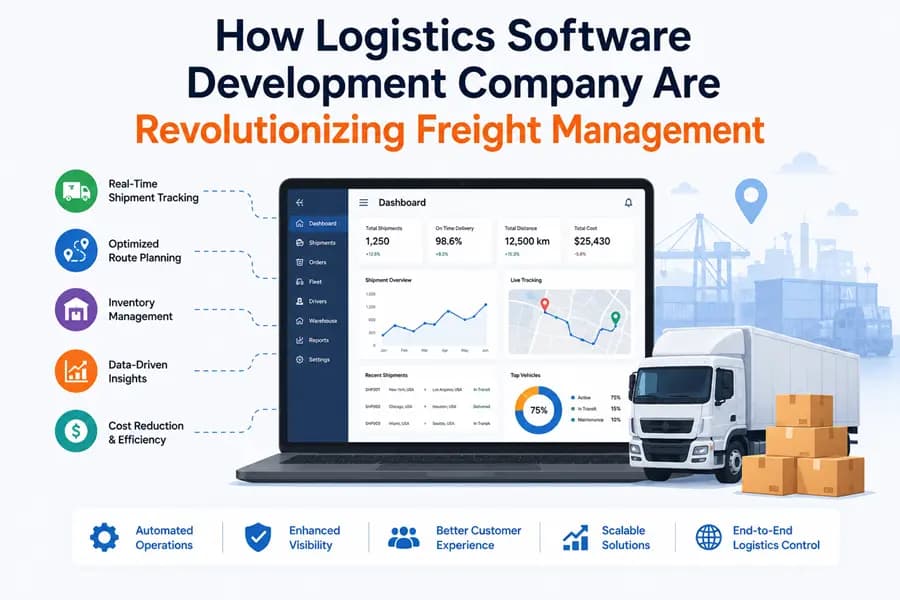
In today’s fast-paced world, the logistics industry is changing drastically. Behind this shift are logistics software development companies. These tech innovators aren’t just meeting the needs of modern freight management; they’re transforming it. They offer solutions that make operations smoother, increase visibility, and improve supply chains.
These companies use real-time tracking and predictive analytics. Such tools can even forecast problems before they occur. By integrating advanced tech into logistics processes, they’re fundamentally altering how things work.
Come along as we look at how these pioneers are shaping the future of freight management and raising the bar in a continually evolving market!
Introduction to logistics software development companies
The logistics world is changing big time, mostly due to tech progress. Companies creating logistics software are right at the centre of this shift, making freight management way better in our speedy world today. With the goal of running smoother and being more efficient, firms are turning to these tech-savvy companies for game-changing solutions.
Freight management goes beyond simply transporting goods from one spot to another. It needs precise planning and teamwork. Given the increasing customer expectations and complicated global supply chains, doing freight management well matters more than ever. Here's where the software comes in—it helps businesses keep up and succeed in the long run.
Old methods frequently fall short, and we see their limits when handling today’s tasks. Fortunately, there are new solutions popping up all the time, made to tackle current issues in freight management. Thanks to the clever folks in logistics software development, we've got innovations that improve efficiencies and set new industry benchmarks. So, let's dive into how these advancements make such a difference.
Introduction to Logistics Software Development Companies
In our modern world, where things move super-fast in logistics and freight management, tech plays a huge role. Because folks are always looking for quicker, cheaper, and more reliable ways to ship stuff, companies that develop logistics software have become really important.
These software firms make custom tools to fit what different businesses need. Whether it’s managing supply chains, drawing up transport plans, or just keeping an eye on shipments, there's a solution for it. And when all these pieces come together, you end up streamlining a lot of grunt work – this helps to boost efficiency and please customers too.
A major pro of using these firms is how well they tie everything up neatly in one place. So, whether it's about getting supplies or making deliveries, every step can be handled by one slick platform. It makes life simpler, and best of all, you get instant updates on everything happening in the whole process.
These companies use high-tech stuff like AI, ML, IoT, and cloud computing to create sturdy and scalable solutions that handle today’s logistics demands. With these tools, they can automate mundane tasks, make smart decisions based on data, and optimize routes for better efficiency.
A key thing that sets them apart is how they focus on customization. They get that each business needs something different, so they don’t just offer a one-size-fits-all solution. Instead, they tailor their software to fit your unique processes, avoiding big disruptions to daily operations.
Also, they’re there for support from start to finish. Whether you need help during implementation or ongoing maintenance after everything’s running, they’ve got your back. Plus, they keep up with the latest industry trends and updates to make sure their software stays current and useful.
Logistics software firms really ramp up freight management by boosting efficiency, cutting costs, and raising customer satisfaction. They use their smarts and tech wizardry to change how logistics folk’s work. This pushes the whole supply chain to run smoother and better, which is awesome for everyone involved.
Read More: Why Businesses Need a Logistics Software Development Company in 2026
What is freight management and why is it important?
Freight management is all about overseeing the transportation of goods from one spot to another. This includes planning, carrying out, and improving how products move around using different types of transport.
This area is super important for making supply chains work well. When done right, freight management means shipments get where they need to go on time and at a lower cost while keeping customers happy.
Companies count on slick logistics to keep up with what customers want and to beat out the competition. Dropped balls like late shipments can really upset clients and ramp up costs too.
As trade gets bigger and more spread out, handling freight correctly becomes even trickier. Businesses now face tons of rules, changing fuel costs, and a quickly shifting playing field.
To win in today’s market, you've got to understand the finer points of freight management. It's key to thriving in the current fast-paced business world.
Freight management is about controlling and organizing how goods move from one place to another. This entails coordinating shipping, storage, distribution, and delivery to make sure products get to their destinations smoothly and economically. Various methods, like road, rail, air, and sea transport, might be involved.
In our global economy, where businesses are huge and products move across long distances, managing freight is super important for logistics. It helps make sure that stuff gets where it needs to go, in one piece and on schedule.
Freight management can really cut costs too. When companies plan out the best routes and get trucks moving faster, they save money. And guess what? These savings often trickle down to us consumers, because the company costs drop when shipping runs smoothly.
This kind of smart shipping keeps customers happy too. Nowadays, we all want things ASAP. So, no one likes it when packages take forever. Good freight management means quicker delivery without sacrificing quality. That's huge for customer satisfaction!
Lastly, there's the eco-friendliness factor. Managing freight better helps the planet by lowering emissions. By figuring out the most efficient ways to transport items—say, packing more into fewer trucks—we use less fuel and that means producing fewer greenhouse gases.
So, better freight management is a win-win-win: it saves money, makes customers happier, and is kinder to the environment.
Modern technologies have really changed how freight management works today. Logistics software now offers awesome tools for real-time tracking, accurate inventory management, and optimized route planning thanks to data analysis. This makes it way easier for firms to handle complicated supply chains, cut mistakes and delays.
Proper freight management is key to smooth supply chain ops and boosting biz costs savings plus customer happiness. Thanks to tech advances, these tasks are now faster and slicker, making efficient freight management super important for businesses in today's world.
Read More: AI-Powered Logistics Software Development: The Future of Supply Chains
The traditional approach to freight management
Freight management has traditionally depended on old-school methods for ages. Companies would use spreadsheets, manual logs, and paper forms to keep tabs on shipments. This way of doing things was not only super time-consuming but error-prone too.
Getting people in touch meant using phone calls or emails which slowed down info-sharing big time. Coordinating with all the parties involved—carriers, shippers, and receivers—became a massive headache because of this.
Plus, tracking where shipments were at any given moment was tough. With no real-time updates, firms struggled to react quickly when something went awry or plans changed.
Then there's cost estimation—it suffered from inaccurate data, resulting in off-the-mark budget projections and surprise expenses.
Sure, old practices made sense at first, but as supply chains got more complicated, their inefficiencies really stood out. So, the freight world needed something groundbreaking to make everything run smoother, faster, and with less mistakes.
How logistics software development companies are changing the game
Logistics software development companies are changing how freight management works. They come up with custom solutions to boost efficiency and save money.
The key is automation. It makes things move quicker by smoothing out processes such as route planning and stock watching. Plus, real-time data lets managers make smart choices to cut down on holdups.
Connecting these systems with what a company already uses is a game changer. It leads to better communication across the board—from those who ship goods to those who carry them and the customers.
On top of that, these systems have simple interfaces. Workers can jump right in without spending days in training classes. The easier tech is to use, the more work that gets done.
It's not just about survival; these upgrades help firms keep ahead of their competitors in a fast-moving business world where being nimble is crucial.
Advantages of using logistics software for freight management
Logistics software brings tons of benefits for freight management. It boosts visibility throughout the supply chain so companies can monitor shipments in real time. This lets them make quicker decisions and react faster to issues.
The software also amps up efficiency by automating tasks. That cuts down on errors and saves heaps of time, shaving off delays in delivery times too.
There's also the pocket-friendly part - optimization reduces those pricey transport fees through smarter route planning and load consolidation.
Plus, communication gets a boost because everyone involved can connect easier. This strengthens ties with both suppliers and clients.
Analysing all that collected data offers valuable insights too. Using these trends and figures, firms can constantly fine-tune their plans.
And since these tools keep tabs on updates, adhering to new rules becomes smoother. This way, businesses sail smoothly in a shifting industry climate.
Case studies of successful implementation
A logistics software dev company worked with a big retail chain to implement a fancy freight management system. This nifty tool cut their shipping costs by 30% and made their route planning way easier, boosting their delivery efficiency too.
Next up, a manufacturing firm saw huge gains after using custom logistics software. It helped them keep real-time tabs on shipments, slashing inventory issues and pleasing customers with faster deliveries.
Then there's the e-commerce startup that used cloud-based logistics stuff. This setup let them expand like crazy while holding down costs. The real-time analytics gave them critical info, helping them beat out competitors.
All these examples show how custom logistics solutions can revamp operations in various fields. Partnering with tech-savvy developers clearly pays off big time, delivering solid results that drive growth and productivity up.
Challenges and limitations of logistics software in freight management
Implementing logistics software in freight management comes with some big challenges. First, integrating it with old systems is tough. Lots of firms are working with outdated tech that just doesn’t mesh with new solutions.
Employee buy-in is another issue. People used to do things the old way might resist change because they fear it’ll make their job harder or mess with their usual routine. This means necessary training can end up being a huge, expensive task.
Then there’s data security. With sensitive info going online, the risk of breaches is high, posing serious problems for both businesses and customers.
Finally, constant updates require ongoing investment. For the software to stay useful, companies need to not only put money into the initial rollout but continuously spend on keeping everything current. That can get pretty pricey and demanding on both budget and staff.
Future predictions for the industry
The field of logistics is about to transform due to tech progress and shifting needs in the market. Companies like Dinoustech that make logistics software stand to play major roles in this change. With AI and machine learning becoming more common in their tools, these businesses will create systems that can handle huge data sets to make better decisions.
Also, because of how e-commerce and global business are booming, the way freight is managed must adjust quickly. Tracking in real time is getting much better, making the process clearer from start to finish. Plus, firms are automating more, which helps to make things run smoother.
Green practices are also important for the future; there's growing pressure to be eco-friendlier. Thus, new software might plan paths to use less fuel and shrink carbon footprints.
More cooperation between different parts of supply chains—like shippers, carriers, and customers—will happen thanks to the platforms created by these tech companies. This not only boosts effectiveness but also builds trust across the board.
As these technologies grow with industry needs, the potential for innovation seems endless. Freight management is heading towards an era of speed and precision, thanks to the hard work of logistics software developers worldwide. The future looks bright as businesses adopt these changes while dealing with complex issues.