Dinoustech Private Limited
How to Build a Scalable Fantasy Sports App Like MyFab11
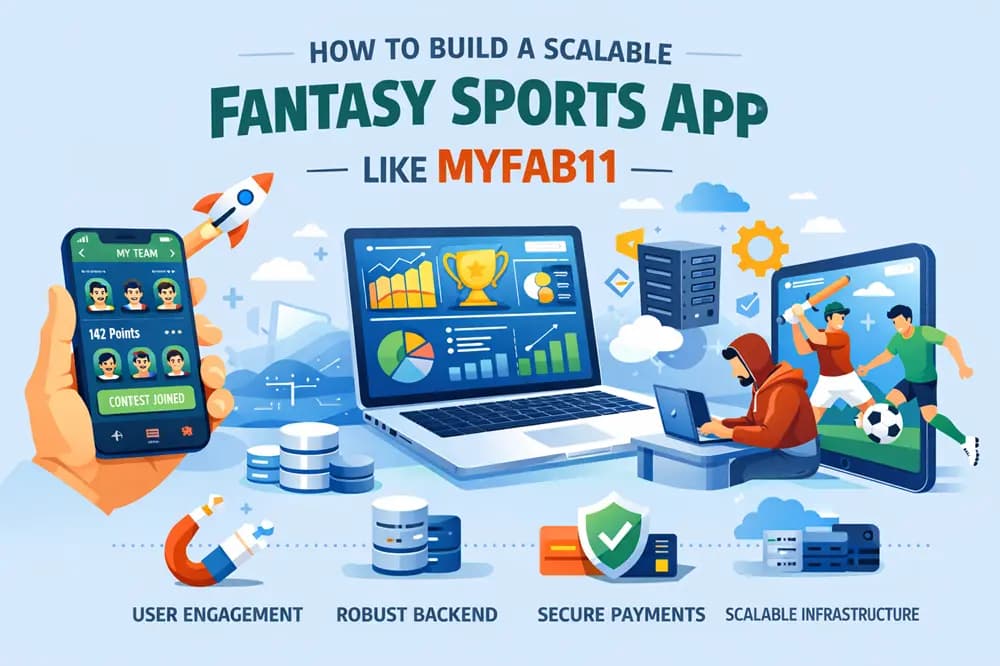
MyFab11 shows that fantasy apps can grow by mixing cricket, community, and easy gameplay. The platform connects users with over five million cricket fans and combines fantasy sports with chat features. This mix is important because users want more than just creating teams; they want to discuss lineups, pitch reports, and match strategies. A good app should follow this idea, not just copy the basics. It should give fans a reason to come back before, during, and after each match. This is how fantasy products become daily habits. The best products make every visit feel useful, even if the user doesn’t join a contest that day.
Now is a great time to create this kind of product. The global fantasy sports market was worth $24.85 billion in 2024 and is expected to grow to $56.38 billion by 2030. In India, the fantasy sports market was about $786.7 million in 2024 and is projected to reach $2.33 billion by 2030. These numbers show steady demand and a strong chance for products that cater to cricket fans. If your app is fast, clear, and trustworthy, you can compete in a market that values fantasy play. There is still room for growth for teams that build carefully and keep things simple.
Study the Market Before You Build
A good app starts with understanding the market. Don't focus on design first. Look at how users behave, the timing of events, and how to make money. Fantasy cricket users often act quickly during IPL, series, and big tournaments. They check match times, player performance, contest size, and prizes before joining. If your app doesn't meet these needs quickly, users will leave. That's why fantasy sports app development should start with research on what users want, pricing, and their problems. The better you match real behavior, the quicker you can gain trust and make money. You should also find out what people ask before they download the app, as these questions show what the app needs to show first.
The Indian sports tech market also shows it's worth investing. A report says India's sports tech market, led by fantasy sports, could reach INR 49.5K crore by 2029. This tells founders that this is not just a trend, but a growing business. When you build based on real demand, you can plan better for ads, keeping users, and adding features. A fantasy product shouldn't rely on excitement alone. It should solve ongoing problems for cricket fans who want easy access, fair rules, and quick rewards. It should also allow your team to test new ideas without disrupting the main process.
Also Read: - Which Company Builds the Best Fantasy Sports App Like FanDuel?
Define the Core Product and Audience
Before you write code, know who will use the app. Some users want to create teams quickly for IPL matches. Others want more features like private leagues, community chat, match insights, and entering multiple contests. A good app should work for both casual users and serious players without feeling crowded. This means you need a clear plan. Decide which users are most important for the first version, then design the app for them. The best IPL fantasy cricket apps keep things simple: pick a match, build a team, join a contest, track scores, and collect winnings. Every extra step should be needed.
MyFab11 shows a good example. Its platform focuses on fantasy play, discussion, and a big cricket community, so users get more than just a contest screen. They have a social aspect that keeps them interested between matches. You can add features like expert tips, debate areas, or match updates, but only if they help the main experience. Don’t add extra things just to seem advanced. A strong product meets one user need very well, then grows carefully as more people use it. This is how fantasy cricket software stays focused and can grow, especially when many users join during busy cricket times.
Build the Feature Set That Drives Repeat Use
Your first version should focus on the features users use the most. Start with easy signup, mobile login, match listing, player selection, joining contests, wallet flow, and score tracking. Add push notifications for lineups, deadlines, and results. Include referral rewards and basic leaderboard views if they fit your model. For fantasy apps, speed is more important than fancy design. If a user can create a team quickly, more people will use it. If the screens are slow or confusing, users will switch to another app. Every feature should make things easier, not harder. Keep the process short and clear at every step. Users should always know what to do next without needing extra text.
For a MyFab11-style app, community features can be good, but they should not slow down booking or team creation. A discussion feed, poll, or tips section can help if they support match engagement. You can also add prediction games, contest reminders, and match history to encourage users to return. The goal is not to fill the app with options but to keep users active all season. A good fantasy sports app plan turns match interest into regular use through timing, clarity, and helpful content. When users feel informed and in control, they stay longer and invite others to join.
Must Read: - Fantasy Sports App Development for FIFA World Cup Like Sorare
Choose a Stack That Handles Growth
A good fantasy app needs a setup that can handle many users, real-time score updates, and safe wallet use. Successful apps usually have a mobile app, a web or admin panel, an API-first backend, cloud hosting, and a database that can manage busy times. Your backend should keep users, matches, contests, payments, and scoring separate so you can change one part without affecting the others. This makes it easier to maintain and helps your team add new features quickly. It also reduces the chance of score mistakes and contest issues, which can hurt trust. A clean setup also makes testing easier, saving time before launch.
You need to track everything from the start. Add logs, analytics, crash reports, and performance checks before you launch. Fantasy traffic often spikes when users create teams quickly. If your system slows down then, it can cause big problems with ratings and support requests. Build for high traffic, not just average traffic. This is the key difference between a small demo app and a real fantasy sports app. One shows a feature, while the other is made to handle live games and growing users. The second needs better scaling, more testing, and clearer control for each release.
Make Trust, Safety, and Compliance Visible
Fantasy app users spend money, time, and focus, so trust must be clear on every screen. Verify users, protect logins, show clear contest rules, and make wallet balances easy to see. For cricket apps, trust also comes from clear scoring, visible captain multipliers, and easy settlement status. If users don’t understand points or rewards, they lose confidence. The same goes for refunds and withdrawals. Users want a fair and predictable platform. That's why compliance and design should work together, not separately. Trust should be clear from the first tap to the final payout.
You also need to manage risks. Add fraud checks, find duplicate accounts, track devices, and ensure secure payments. Keep KYC steps simple but strong enough to protect the platform. If you plan to operate in different states or add new game types later, your policies should allow for changes. This is very important in fantasy cricket software development because the business relies on repeat deposits and use. A platform that handles safety well can grow faster because users, partners, and advertisers trust it more. That trust becomes a key asset for your business. It helps keep users, grow referrals, and expand into new contests or markets.
Also Read: - How to Create a Fantasy Sports App Like Vision11 from Scratch
Design the Admin Panel for Control
Many founders focus on the user app and forget about the admin side. This can cause problems later. A good admin panel helps your team manage contests, see users, check payments, handle complaints, change scoring, and watch for suspicious activity. It should also show daily active users, how many contests are filled, app errors, payment issues, and revenue trends. Without this control, support gets slow and things become messy. When running a live fantasy platform, every minute matters. Your team should fix problems, answer questions, and change content without needing developers for every small change. Good control also eases pressure on customer support during busy times.
The admin panel also helps with growth experiments. You can test new contest types, change referral bonuses, adjust banners, and compare results. This helps you make decisions based on data, not guesses. A good app should let the business team act quickly, especially during busy cricket seasons when user behavior changes often. If the admin side is weak, your product team slows down. If it is strong, your app is easier to manage, improve, and grow over time. That’s why backend control is just as important as the user interface. It keeps everything stable under pressure and gives leaders better insight.
Add Data, Personalisation, and Retention Loops
Fantasy apps do better when they help users before and after the game, not just during it. Use data to show how players are doing, their past games, trends at the venue, how many spots are left in contests, and upcoming deadlines. The more useful the info is, the more users will come back. Personalization helps too. Show favorite teams, preferred contest sizes, recent picks, or reminders for leagues users follow. This makes the app more engaging. Data should guide what users see next, not just sit in reports. Small, helpful updates can change how users act over the season.
Keeping users engaged is important. Send reminders for matches, alerts for lineups, notifications for results, and offer follow-up contests after each game. Add rewards for streaks, season badges, and referral bonuses if they fit. But keep it simple. Too many offers can be confusing. The best fantasy sports app teams use data to make things easier, not messier. They try new ideas, remove what doesn’t work, and change based on the data. This helps the app grow and stay useful for users over time, not just for one tournament.
Must Read: - What It Takes to Build a Successful Fantasy App Like Gamezy
Plan Launch, SEO, and User Acquisition
A good launch starts before the app is live. Build a waitlist, release a beta version, and invite early users from cricket groups and local sports pages. This helps you find problems before the app is fully launched. You also get early feedback on how users sign up, how contests work, payment issues, and content quality. When the app is ready, create landing pages for specific searches like IPL fantasy cricket app development. These pages attract users who know what they want and are ready to act.
Your launch plan should also include simple content and app store optimization. Write pages that explain how the app works, how to create a team, how to join contests, and how rewards work. Add FAQ sections, city or league pages, and helpful blog posts that answer common questions. This improves search traffic and builds trust. A user who reads a clear explanation is more likely to install and sign up. Launch marketing should focus on being clear, not noisy. This attracts serious users instead of random visitors. A clear message also helps your sales and support teams answer questions better. It keeps the process smoother.
Work With the Right Development Partner
A good fantasy app needs more than just a basic coding team. You need a partner who knows about products, backend systems, user experience, rules, and growth. Dinoustech can help with planning, building, testing, and improving your app after it launches. The right partner will ask about your contest rules, payment process, support needs, and growth goals before they start coding. This saves time and avoids costly mistakes later. A skilled team will also help you avoid quick fixes that can cause problems later. The goal is to build correctly, not just quickly.
Before you launch, check everything. Test the app on slow networks, older phones, and different screen sizes. Make sure score updates, payment retries, login speed, and notifications work well. Review the support process too, since users will have questions right away. After the app is live, keep making it better using data, user feedback, and updates. This is how you grow. A fantasy platform grows when it is fast, fair, and useful during every cricket season. With clear planning, strong building, and ongoing improvements, your app can compete with big names and still have room to grow. The market is big enough, but only focused teams can succeed. A strong launch partner will also help you think beyond the first version.