Dinoustech Private Limited
Want to Build Your Own Fintech App in Kerala? Here’s How to Start
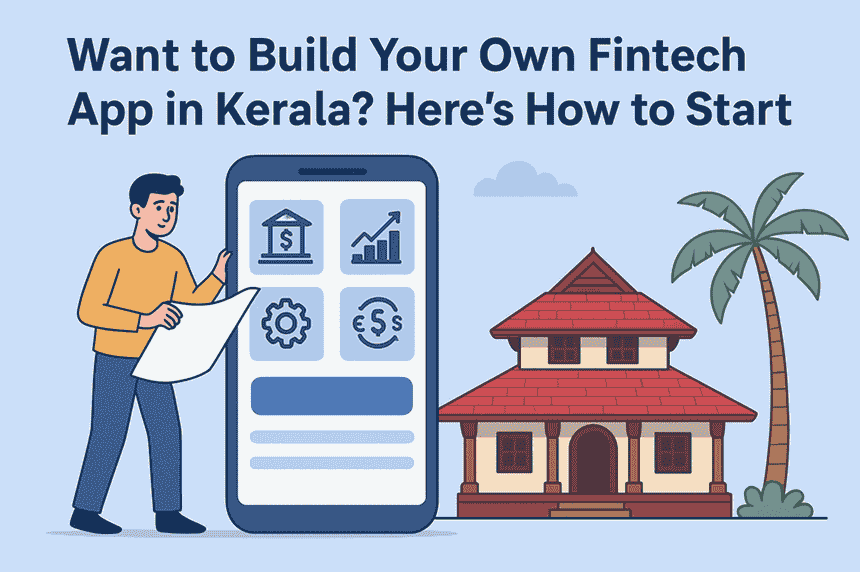
High literacy, strong mobile penetration, and a services-driven economy make Kerala a peculiarly fertile ground for fintech innovation. In the state capital of Thiruvananthapuram, both government initiatives and digitally savvy consumers create early adoption audiences for mobile wallets and payment apps, while commerce nodes such as Kochi (Ernakulam) and Thrissur incubate startups and merchant ecosystems demanding efficient reconciliation and merchant finance. Coastal hubs like Kozhikode and Kannur present different patterns: fishermen, small exporters, and tourism-oriented businesses need speedier settlements, currency flexibility, and more lightweight invoicing. Kerala's tourist circuits-from the backwaters near Alappuzha to the hill stations around Munnar and the beaches near Varkala-create seasonal spikes that fintech apps must anticipate with elastic infrastructure and smart cashflow features.
Equally consequential in the adoption story are the state's smaller towns and municipal networks. The markets in Kollam have their own rhythm, as do the trade centers in Kozhikode, while Aluva and Edathala near Kochi function as logistical nodes benefiting from faster supplier payments. Inland towns like Kottayam, Palakkad, and Thrissur suburbs demonstrate robust demand for payroll tools and embedded merchant payment options. A pragmatic fintech app development company in Kerala understands this patchwork-from pilgrimage-driven microtraders in Guruvayur to coconut and spice merchants in Kayamkulam-and builds platforms serving both urban sophistication and rural practicalities. Dinoustech, as a fintech software development company, often advises clients to start with an MVP focused on payments and reconciliation, then layer advanced features as merchant trust grows.
Identify the right customer segments and product-market fit
Fintech success is all about understanding who will use the app and why. For high-frequency urban users in Bengaluru-sorry, out of scope-rather, in Kerala, the tech-oriented professional in Kochi, finance teams in Thrissur, and younger consumers in Thiruvananthapuram want slick UX, bank linking, investment access, and budgeting tools. Concurrently, shopkeepers in Kollam, houseboat operators in Alappuzha, and hotel owners in Varkala want reliable payouts and low-cost payment acceptance. Often, the informal economy in towns like Attingal, Chengannur, Cherthala, and Changanassery has a very thin or even no formal credit history; hence, fintech products that use alternative underwriting based on digital receipts or point-of-sale patterns may unlock working capital for many merchants.
Different verticals need different features. Agricultural traders around Palakkad and Punalur may want supply-chain financing and escrowed payments, while education service providers near Kozhikode and Muvattupuzha prefer subscription billing and installment payments. The tourist-dependent clusters in Kovalam near Thiruvananthapuram, Kumily, and Madikeri require multi-currency acceptance and fast settlement for merchants who see surges in footfall. A deliberate product-market fit exercise that segments users by location and function helps a fintech app development company in Kerala craft modules that deliver immediate value, reduce friction, and maximize adoption.
Also Read: - How Fintech Apps Are Transforming Banking & Payments in Karnataka
Core features you should build first and why they matter
Start with features that solve concrete pain points: secure onboarding, digital KYC, UPI and wallet payments, merchant QR acceptance, transaction history, and simple reconciliation dashboards. For instance, merchants in Kottakkal, Kottarakkara, Kottayam, and Kollengode benefit instantly from automated reconciliation that reduces bookkeeping errors, while service providers in Ettumanoor, Erattupetta, and Piravam appreciate invoicing features that match local taxation rules. Customers in Neyyattinkara and Nedumangad value instant receipts and dispute-resolution tools because trust is built when problems get resolved quickly and transparently.
Features like pre-authorizations, dynamic refunds, and multi-currency checkout make a tangible difference for the tourism ecosystem: guesthouses and homestays in Kovalam, houseboat operators in Alappuzha, and tour operators around Munnar and Kovalam-adjacent towns. For shopkeepers in Kayamkulam, Haripad, Cherthala, and Chavakkad, low transaction fees, offline-capable POS, and easy settlement to local bank accounts ensure quick adoption. The feature set is logically structured into a phased roadmap by a reliable fintech software development company: core payments and KYC first, merchant dashboards and analytics next, and lending or investment modules later as transaction histories mature.
Design and UX considerations for Kerala’s diverse users
Therefore, designing UX for Kerala should be sensitive to device types, languages, and local user behavior. While users in urban centers like Kochi, Thrissur, and Thiruvananthapuram would expect a modern, app-like experience, simple flows, large buttons, and local-language labels in Malayalam reduce friction in more rural or older-user populations across Pathanamthitta, Alappuzha, Kayamkulam, and Punalur. Accessibility features such as voice prompts and clear on-screen guidance make older users feel confident transacting in towns like Kollam and Kottayam, while step-by-step onboarding and guided KYC support have been critical in smaller municipalities such as Kondotty, suburbs of Kozhikode, and market towns like Chalakudy.
Network variability matters. Places like Kalpetta and the high ranges near Wayanad, or hill areas around Kumily and Sulthan Bathery, may have intermittent connectivity, so offline-first design and efficient data synchronization are key. For merchants in busy markets, such as Thrissur and Kozhikode, instantaneous confirmations and fast POS interactions are top of mind. Building intuitive micro-interactions and predictable error handling-for example, graceful rollbacks when a settlement fails-is what turns a functional app into a trusted business tool. Dinoustech's design teams emphasize iterative usability testing across city types-from Kochi's tech corridors to Kanhangad, Kanhangad (as noted twice in the list), local bazaars-to make sure UX adaptations work in the real world.
Must Read: - Fintech App Development in Kashmir: Trends, Opportunities & Challenges
Payments, settlements and banking integrations you’ll need
Payments are the lifeblood of any fintech app. The integration of UPI rails, major card processors, net-banking, and local ACH-like settlement systems is imperative for merchants at Muvattupuzha, Perumbavoor, Aluva, and Ettumanoor since they demand direct bank settlements. For fishing and export centers like Kozhikode and its port-adjacent towns, fast remittances and cross-border capabilities can be critical. For agricultural belts around Palakkad and Ottapalam, direct integrations with local cooperative banks and microfinance institutions support smoother supplier payments and buyer settlements.
Frequency of settlements matters to small merchants: daily payouts stabilize cash flow in tourist centers such as Varkala and Kovalam, while weekly settlements may be acceptable in other markets. For merchants in Changanassery, Cherthala, and Kayamkulam, direct bank transfers plus easy reconciliation spreadsheets reduce accounting friction. A Kerala-based fintech app development company should build flexible payout schedules, multiple settlement rails, and support for local banking quirks so that merchants and users do not face avoidable delays while moving money.
AI Implementation: smarter underwriting, security, and personalization
AI moves fintech beyond simple payments to predictive, personalized, and secure financial services. For instance, AI-based credit underwriting may enable the handicraft seller in Alappuzha or the small café owner in Thrippunithura to gain access to microcredit based on transaction histories and alternative data, thus enabling growth without traditional collateral. Fraud detection models protect seasonal businesses in Varkala, Kozhikode, and Kovalam, where short-term high-volume transactions increase the attack surface. Personalization engines recommend offers, savings plans, and insurance products that align with user behavior and boost engagement and retention in urban areas such as Kochi, Thiruvananthapuram, and Thrissur.
Implementing AI responsibly requires solid data pipelines, explainable models, and continuous monitoring to avoid bias. In tourist hotspots like Kumarakom, guesthouse operators and boat owners gain from dynamic pricing suggestions powered by demand forecasts, while merchants in market towns like Chittur-Thathamangalam, Kollengode, and Kollengode gain sales-boosting recommendations. Dinoustech helps clients build MLOps practices so models are re-trained with fresh local data, audited for fairness, and transparent enough to satisfy regulators and customers in Kerala's diverse market.
Also Read: - Why Businesses in Jammu Should Invest in Fintech App Development
Compliance, security and operational readiness for Kerala’s regulators
Security and compliance are a given. Kerala merchants and consumers demand secure authentication, tokenized card storage, end-to-end encryption, and simple dispute-handling procedures. Be it government-payroll users in Thiruvananthapuram, employees in industrial clusters around Alappuzha and Kochi, or informal merchants in Kanhangad and Kannur, the implementation of PCI-DSS, RBI guidelines, KYC, and AML checks becomes indispensable. Transparent fee structures and easy support for chargebacks and reversals build local trust, especially in high-traffic markets like Thrissur and the coastal trade hubs of Kochi and Alappuzha.
It also includes operational readiness in terms of staffing for 24/7 incident response, customer service, and localized outreach during festival seasons and tourist spikes in Guruvayur, Gokarna-adjacent regions (note that Gokarna is in Karnataka), and Kerala's own festive surges across Thrissur, Guruvayur, and Guruvayur-adjacent towns. A Kerala-based fintech app development company will create a compliance playbook, provide necessary audits, and help implement role-based access control and secure CI/CD pipelines and monitoring systems, so that merchants operating in Kollam, Kottayam, and Palai can have complete confidence in their work.
Monetization models that work for Kerala’s ecosystems
How you decide on monetizing your fintech app would depend on the customer and the market. Merchant-focused models, especially in busy trading centers like Thrissur, Kochi, and Kollam, often combine low transaction fees with subscription tiers for analytics and payroll features. Consumer applications across Thiruvananthapuram, Kochi, and Kozhikode can generate revenue from interchange, referral to investment or insurance, and premium personal finance tools. In tourist towns like Varkala, Alappuzha, and Munnar, value-added fees for rapid payouts, currency conversions, or multi-currency wallets are acceptable to merchants who face high seasonal demand.
Micro-lending and buy-now-pay-later facilities are also feasible in the Kerala markets provided underwriting is sound. For small merchants in Kottarakkara, Kottakkal, Haripad, and Kayamkulam, short-term merchant credit linked to authenticated transaction flows minimizes cash strain and introduces a fresh revenue stream on the platform. Dinoustech suggests pricing fairly and communicating transparently so that the monetization strategy in this app will further strengthen retention rather than create perceptions of opportunism.
Must Read: - Building Smarter Fintech Apps in Jharkhand: The Role of Artificial Intelligence
Go-to-market strategies: pilots, partnerships and scaling across Kerala
A successful KT go-to-market plan balances city pilots with strategic partnerships. Pilot in a single representative urban market like Kochi or Thiruvananthapuram to refine core flows, then expand into tourism-oriented towns like Varkala, Alappuzha, and Kovalam, and finally into trade-heavy municipalities such as Thrissur, Kollam, Palakkad, and Kottayam. Partnerships with local merchant associations in Changanassery, with houseboat associations in Alappuzha, tie-ups with tourist boards in Gulmarg-excuse me, Gulmarg is in J&K-rather, tie-ups with local tourism associations for Munnar and village-level cooperatives in Palai accelerate adoption.
Agent-led onboarding and vernacular support are necessary for rural penetration in Nilambur, Perinthalmanna, Payyanur, Panoor, and market towns like Shoranur and Ottapalam. Integrations with local banks, microfinance institutions, and POS vendors used across Kottayam, Punalur, Tirur, Taliparamba, Thalassery, and Thodupuzha reduce friction for merchant adoption. Scale occurs through a repeatable channel playbook, a reliable support model, and measured feature expansion based on transaction telemetry.
Why choose Dinoustech and next steps to get started
Building a fintech app in Kerala is a practical, high-impact project when you partner with a team that combines product sensibility with regulatory and technical rigor. Dinoustech, as a fintech software development company with domain expertise, partners with businesses to design modular, compliant, and market-tested fintech platforms. Whether serving the cosmopolitan consumers of Kochi and Thiruvananthapuram, the merchant networks of Kollam, Thrissur, Kozhikode, and Kottayam, or tourist-driven microeconomies in Varkala, Alappuzha, and Munnar, Dinoustech helps scope an MVP, choose the right tech stack, and launch pilots that validate assumptions quickly.
The recommended next steps are simple: define the primary use case and target cities, build an MVP that solves a clear pain point such as instant merchant settlement or automated reconciliation, and plan a phased rollout that includes local partnerships, multilingual onboarding, and a compliance-first approach. With the right partner and pragmatic product roadmap, fintech apps can accelerate commerce, improve liquidity for small businesses in Pathanamthitta, Peravoor, Punalur, Kanhangad, Kanhangad (noted earlier), Nedumangad, and beyond, while creating value that will endure across Kerala's diverse economic landscape.