Dinoustech Private Limited
Build a Fantasy Cricket App for T20 World Cup for High Traffic Platforms
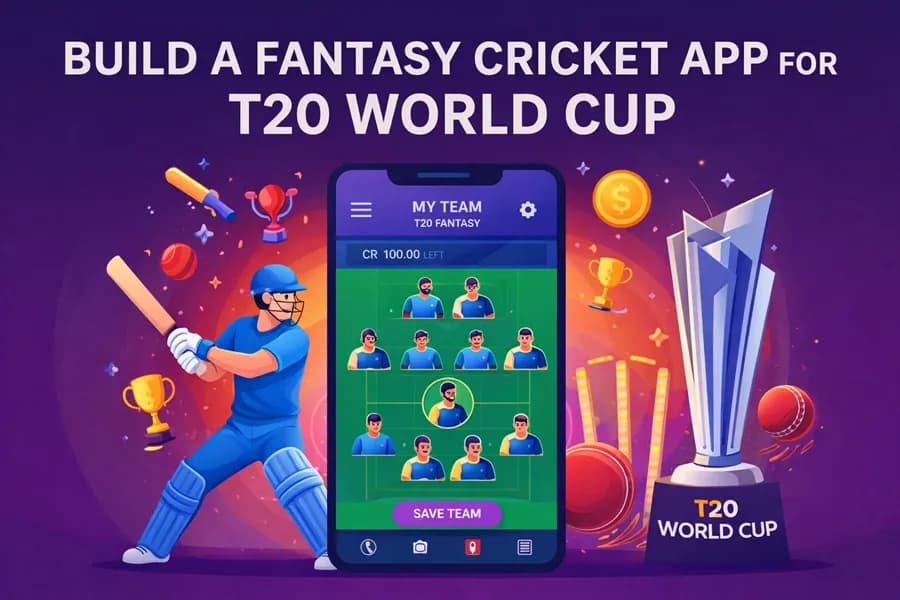
Building a fantasy cricket app specifically engineered for the T20 World Cup requires a blend of sports product intuition, rock-solid engineering, and operational playbooks that stand up to the busiest live moments. Dinoustech treats these projects as high-stakes productions — where scoring correctness, payout integrity, and sub-second UI responsiveness are non-negotiable. The product must perform under sudden spikes when millions of users check lineups, submit last-minute changes, and monitor live scoring feeds simultaneously. Success is not just about launching a feature set; it’s about creating a resilient platform that protects user trust, keeps latency low during peak minutes, and automates the manual processes that would otherwise buckle under pressure. This article lays out a full blueprint — from product and contest design through real-time architecture, payment flows, anti-fraud, and live ops — so teams can build a high-traffic fantasy cricket platform that thrives during the T20 World Cup and beyond.
Understanding the T20 World Cup Opportunity and Audience
The T20 World Cup is one of the most time-compressed and intensely followed sporting events, attracting both hardcore fantasy players and millions of casual fans who suddenly want to participate in match-day action. This dual audience dynamic shapes product choices: casual players need simple, low-friction contest formats and quick onboarding, while power users expect deep strategic options, advanced stats, and larger prize formats. Monetization and lifecycle strategies must reflect this split — the product should convert curiosity into first deposits through low-commitment contests, and then gradually introduce premium formats and subscriptions for high-LTV players. Geo-targeted offers, vernacular UI, and broadcast-synced features such as short-form highlights and pushable captain suggestions work especially well in India’s diverse market. Preparing for the World Cup means understanding the behavioral surge patterns — large influxes around marquee matches, massive mid-match traffic for lineup changes, and intense evening peaks — and designing both product and operations to treat these surges as normal, not exceptional.
Core product vision and contest mechanics that convert
An elegant contest design is the product’s first competitive advantage: formats must be accessible for newcomers yet flexible enough to satisfy experienced strategists. The foundational gameplay includes quick pick and custom drafts, captain multipliers, per-match and tournament leaderboards, and event-driven contests like last-over specials. User journeys should minimize friction from install-to-first deposit, with progressive KYC and instant virtual cards for fast checkout. Designing fair prize structures and carefully balanced entry tiers keeps both mass and niche players engaged without creating unsustainable prize liabilities. Products that win in major tournaments invest heavily in transparent rules and an easy-to-understand scoring matrix — players should never guess why points changed. When imagining the launch partner, many operators seek a reliable fantasy app development company that not only builds code but also helps craft contest economics, prize curves and entry-level funnels tested against live tournament dynamics.
Architecture for real-time scoring, low latency and fault tolerance
High-traffic fantasy platforms live or die by their real-time systems. The core engineering challenge is delivering consistent, deterministic scoring and leaderboard updates with latencies low enough that users feel the platform is live with the broadcast. Architectures that succeed use an event-driven model with immutable event logs for ball-by-ball feed ingestion, an in-memory scoring engine for rapid recalculation, and a deterministic reconciliation pipeline that guarantees eventual consistency and auditable corrections. Stateless API servers scale horizontally for user reads and writes, while a dedicated scoring cluster handles compute-intensive tasks. Caching is used strategically: precomputed leaderboard shards, CDN-backed static assets, and ephemeral session caches reduce origin load during spikes. Design for graceful degradation: when components are stressed, non-critical UI elements fall back to cached values while core financial transactions and scoring remain strictly consistent. Experienced teams often ask a seasoned fantasy sports app development company to map these trade-offs and build test harnesses that reliably simulate match-day traffic.
Match-day scalability patterns: queues, sharding and state management
Match-day scalability isn’t a single technology choice but a collection of operational patterns that together prevent meltdown: heavy write workloads during pre-match lineup submission windows must be queued and processed idempotently; leaderboards should be sharded by contest and paginated with cached hot shards; and stateful scoring must be isolated from user-facing APIs so that scoring corrections do not block UX flows. Use durable message queues with dead-letter handling for ingestion spikes, and partition contest state so that a hot contest doesn’t slow unrelated contests. Apply database sharding for player wallet ledgers and store a canonical, append-only event stream that enables replayable scoring and simplifies audit trails. Implement rate limiting and optimistic locking with clear error messaging so users understand when a submission is delayed rather than silently dropped. For engineering teams that need a tactical playbook, T20 worldcup fantasy app development requires rigorous load testing that includes synthetic feed anomalies and extreme concurrent write scenarios to validate the full stack under tournament pressure.
Live data, stat feeds and integration robustness
The reliability and latency of your live data feed underpin user trust: discrepancies between broadcast commentary and in-app stats damage credibility quickly. Contracts with feed providers must include SLA clauses for latency and data correction procedures; always plan for redundant feed providers and local validation layers that detect and reconcile inconsistent events. Build a deterministic scoring microservice that consumes canonical ball-by-ball events and produces point deltas, plus a correction protocol that applies retroactive adjustments cleanly. For marquee events, implement a pre-approved rule change workflow so product teams can rapidly modify scoring rules or override automations with human-verified adjudications. Many operators create an internal “sports desk” — a lightweight human operations layer that monitors feed quality and approves corrections during live matches — which dramatically reduces disputed outcomes and speeds up resolution. If you’re preparing for the 2026 tournament, an investment in robust integrations is central to fantasy app development for T20 world cup 2026 readiness.
Payments, wallets, and optimizing for fast deposits and payouts
A fast, trusted payments experience is essential to convert users during the limited window of a match. Integrate local payment rails and UPI for instant payouts in India, add wallets and stored-value balances for micro-transactions, and design refund and settlement flows that tie every wallet movement to an immutable ledger. Progressive KYC minimizes friction: allow small first deposits with limited withdrawal rules, escalate KYC requirements as deposit size grows, and use instant document verification to speed approvals. For promotions and bonuses, use segregated promotional wallets with straightforward expiration and usage logic to avoid confusion at payout. Architect settlements so that large prize payouts involve multi-party signoffs and automated notification flows, ensuring customer support teams can act confidently during high-value wins. If your budget is constrained but quality must remain high, partnering with an affordable software development company that understands financial rails and compliance can yield a pragmatic balance between cost and reliability.
Fair play, anti-fraud and regulatory safeguards
Fairness is the single strongest trust signal for fantasy platforms. Implement layered anti-fraud: device fingerprinting, IP and geo-velocity checks, session correlation, behavioral analytics for collusion detection, and automated anomaly triggers for unusual prize claims. For syndicate and multi-entry structures, enforce membership and share rules with immutable accounting to prevent abuse. Maintain a transparent appeals and dispute mechanism that ties each claim to the event stream and scoreboard snapshot, so customers see exactly how outcomes were determined. Comply with local regulations on gaming and wagering by working with legal counsel and building monitoring and reporting systems that generate exportable compliance artifacts. Contingency planning is vital: have pre-approved playbooks for scoring controversies and a communication cascade that includes timely in-app messages explaining any corrections or refunds. For building robust mobile experiences while meeting these safeguards, many teams work with a specialist mobile app development company to ensure device-side telemetry and secure SDK integrations are implemented correctly.
Engagement, retention and monetization during and after the World Cup
Sustained value comes from thoughtful engagement design that moves users from match-to-match participation into longer-term habits. Use a layered retention strategy: immediate hooks like streak bonuses and quick pick coupons drive match-to-match retention, while subscription models, season passes, and loyalty tiers create predictable revenue. Community features such as private leagues, influencer managed contests, and creator monetization channels help virally grow the user base without disproportionate marketing spend. Data-driven personalization improves contest recommendations and optimizes entry suggestions based on deposit behaviour and previous performance. Monetization should be balanced: freemium and low-entry micro-contests attract volume, while premium tournaments with curated prize pools and branded sponsorships deliver higher margins. Building marketing funnels with deep links, broadcast tie-ins, and rapid onboarding reduces drop-off during the short windows when fans decide to participate, and collaborating with a skilled web development company can maximize funnel conversion and campaign landing page performance.
Roadmap, live operations and why Dinoustech is the partner to build with
Launching a high-traffic fantasy cricket product requires a phased roadmap that validates assumptions early: start with a tightly scoped MVP focused on match-day essentials and a small set of contest types, then iterate toward richer game mechanics, community features, and monetization experiments as contest liquidity grows. Live operations must be staffed and rehearsed — run tabletop drills, execute full dress rehearsals with synthetic feeds, and maintain a runbook for every major incident type. Dinoustech delivery model combines product thinking, sports domain expertise, and engineering practices designed for tournament rigour; we provide the cross-functional team you need — scoring engineers, real-time architects, payments specialists, fraud analysts, and live ops coordinators — to ensure your platform not only launches but also survives and thrives through the T20 World Cup’s highest-risk moments. If you want a tailored phased plan with cost estimates, high-fidelity load testing scripts, and a live-ops playbook for the tournament window, Dinoustech can produce a deliverable roadmap that converts aspiration into a reliable, scale-ready product.