Dinoustech Private Limited
Build a Multi-Game Lottery App Like Oz Lotteries | Dinoustech
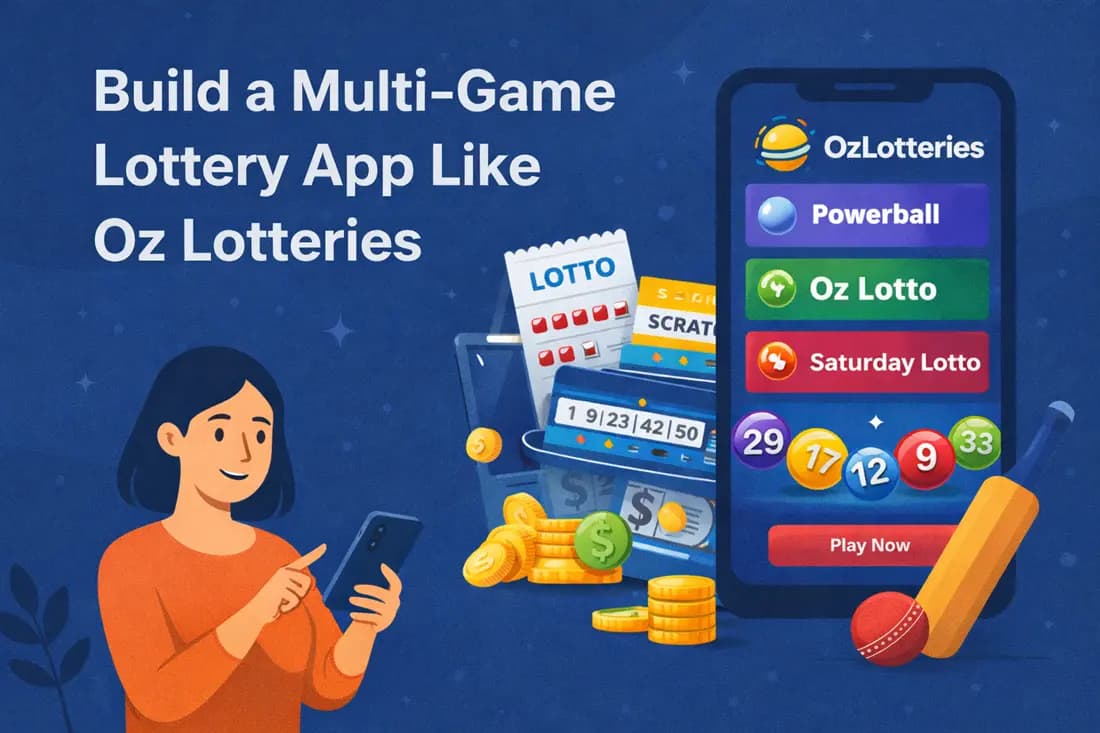
Building a multi-game lottery app that competes with established platforms requires more than a checklist of features; it requires a deep understanding of player psychology, regulatory obligations, payment flows, and operational resilience. Dinoustech approaches such projects by treating the app as a regulated consumer platform from day one — where trust, security, and clarity are fundamental product differentiators. When a client engages a lottery app development company, the initial work centers on defining the product’s core value proposition, who the primary players are, and which game formats will best achieve sustainable acquisition and retention. This stage is crucial because it determines whether the platform will be a niche play with high-margin microgames or a broad catalog that includes national jackpots, syndicates, and instant-win offerings. The choices made in product definition shape architecture, integrations, and costs, so a measured, research-driven approach helps companies avoid costly rework later in the lifecycle.
Why Now Is the Right Time to Build
Consumer behavior has shifted decisively toward mobile-first convenience and trusted digital payments, and this trend has created an opening for well-executed entrants who can deliver a delightful, compliant experience. Market conditions are favorable for new products that can combine official draw ticket sales with added-value services like syndicates and subscriptions, particularly when these services are packaged inside a polished digital experience. In Australia, players increasingly expect an app that provides fast verification, transparent odds, and reliable payout mechanisms; an offering that mirrors user expectations set by incumbents like ozlotteries australia must therefore emphasize both convenience and credibility. Advances in identity verification, payment orchestration, and cloud scalability reduce some of the historical friction of launching regulated platforms, but the legal and reputational risks of getting compliance or payout mechanics wrong remain significant. Timing a launch to coincide with clearly defined product readiness and supportive partnerships is often more important than launching quickly.
Market Opportunity and the Regulatory Landscape
Entering a mature market requires a dual focus on differentiation and compliance: players want both novel experiences and the reassurance that they are buying legitimate tickets from a trusted operator. The Australian market in particular presents clear consumer expectations around auditability, transparency, and age verification, which creates both barriers and opportunities for new entrants. A successful product often positions itself alongside established brands by offering complementary formats — such as smaller-stakes daily games, themed instant wins, or curated syndicates — which broaden appeal without directly cannibalizing existing market segments. Companies aiming to compete with established platforms should analyze player behavior across states and demographics to identify underserved segments and design their product to deliver legally compliant experiences that scale. For businesses that seek to build an ozlotteries similar app, strong partnerships with licensed game providers and a rigorous approach to regulatory reporting will be essential to gaining player trust and avoiding costly compliance setbacks.
Product Vision: Games, Syndicates, and Instant Wins
A long-term product vision balances staple draw tickets with high-engagement formats that keep players returning between draws. Syndicates, subscriptions, and instant-win games are complementary products that increase lifetime value and smooth revenue volatility between major jackpots. Syndicates, properly implemented, let players access higher ticket volumes without paying the full cost individually; this requires precise share tracking, automated prize distribution, and clear legal terms embedded in the product. Subscriptions reduce churn by turning occasional buyers into recurring revenue streams, while instant-win and promotional mini-games create daily engagement hooks. When designing an ozlottery similar app development roadmap, product teams should prioritize features that strengthen trust — transparent receipts, visible odds, and simple claim workflows — because these reduce support friction and build reputational capital, which is invaluable in a sector where trust is synonymous with legitimacy.
Core Player Features That Drive Engagement
Players expect a simple, reassuring experience from onboarding to claim processing, and product design must focus on lowering friction at every step. Fast account creation with secure verification, an intuitive number selection and checkout flow, clear presentation of odds and prize tiers, and immediate confirmation of purchases are table stakes for converting interested users into paying customers. Value-add features such as ticket gifting, easy syndicate management, and personalized recommendations help players discover new formats and increase average spend per user. Thoughtful push notifications and in-app messaging that respect user preferences and frequency further boost retention without borderline spammy behavior. When selecting a mobile app development company, prioritize teams that understand the nuances of conversion optimization on small screens and can design resilient transaction flows that perform reliably on a mix of mobile networks and device types.
Security, Compliance, and Responsible Gaming
Security and regulatory compliance are non-negotiable pillars of any legitimate lottery platform: they protect users, the business, and the brand. Platforms must implement strong identity verification, encrypted storage for sensitive data, PCI-compliant payment flows, and immutable audit logs for each ticket sale and payout. Responsible gaming features — deposit limits, self-exclusion options, clear information about odds, and accessible support for problem gambling — are both ethical necessities and regulatory requirements in many jurisdictions. Designing these features into the user journey rather than grafting them on later helps maintain player trust and reduces legal exposure. Working with a seasoned software development company that has experience in regulated verticals can speed up compliance work and avoid rework by ensuring that operational processes and product flows align with legal obligations from the start.
Mobile Experience and Technology Choices
The quality of the mobile experience often determines whether users adopt and recommend an app. Companies must thoughtfully decide between native and cross-platform development based on target device demographics, performance requirements, and desired time-to-market. Native development can offer the smoothest animations and most reliable device-specific integrations, while modern cross-platform frameworks can reduce development and maintenance cost if the app targets broad device parity. Regardless of framework choice, the mobile UX must prioritize quick onboarding, biometric authentication where available, clear transaction confirmations, and graceful handling of network interruptions. Push notifications and in-app campaigns should be personalized and contextual to avoid user fatigue. Performance matters: fast load times, snappy interactions in number selection screens, and instant confirmation messages during high-volume draw windows differentiate products that feel professional from those that feel amateur.
Backend Architecture, Scalability, and Reliability
A resilient backend is the engine that keeps a lottery platform trustworthy during peak demand. Draw windows can generate sudden, intense traffic spikes that require architecture designed for concurrency and graceful degradation. Event-driven processing, reliable queuing for ticket issuance, idempotent payment reconciliation, and precise ledgering for every transaction are best practices that prevent double charges, lost tickets, and reconciliation headaches. Planning for horizontal scalability, caching, job scheduling for draw processing, and automated backup and recovery means the engineering team can confidently support high-profile jackpots and promotional events. Observability — monitoring, logging, and alerting — paired with tested runbooks ensures the operations team can respond quickly to incidents. Designing systems for predictable behavior under stress preserves customer trust: players must see accurate ticket status and timely draw results, or the platform’s reputation suffers irreparably.
Payments, Integrations, and Partnership Strategy
Payments and third-party integrations are central to user trust and the platform’s commercial viability. Supporting multiple payment options — cards, local bank transfers, and popular wallets — reduces friction at checkout and helps conversion in diverse markets. Integration with licensed game providers, identity verification services, marketing automation tools, and analytics platforms extends the product’s capability quickly while keeping specialized functions outsourced to trusted vendors. Well-designed integration layers allow the app to swap providers or add new methods without significant rewrites, protecting the product from vendor lock-in and enabling rapid response to market demands. Building strong relationships with licensed distributors and gaming bodies opens the path to offering official tickets and accessing larger jackpots, which in turn increases customer acquisition potential through trust and legitimacy.
Launch Strategy, Growth, and Long-Term Roadmap
A successful launch pairs a technically sound MVP with a measured go-to-market strategy that validates product-market fit before scaling. Initial pilots in targeted geographies or tightly defined user cohorts allow teams to test purchase flows, claim mechanics, and customer support processes under real load. Growth levers such as referral programs, influencer partnerships, localized promotions, and partnerships with community organizations amplify reach while maintaining acquisition cost discipline. Over time, the roadmap should focus on converting casual players into habitual users with subscription products, curated syndicates, and retention-driven promotions that increase lifetime value. Continuous experimentation — A/B testing onboarding flows, promotional creatives, and subscription bundles — yields data-driven improvements that refine unit economics. With a disciplined approach to growth and a sharp focus on operational excellence, a new entrant can sustainably expand its offerings while preserving player trust and compliance, positioning itself as a credible alternative to incumbents.
Why Partner with Dinoustech and Next Steps
Dinoustech brings hands-on experience building regulated consumer platforms that balance user experience, technical rigor, and compliance. Our engagement model begins with a focused discovery phase that validates product assumptions, followed by iterative MVP delivery that tests core monetization and retention hypotheses under real conditions. For teams that want to move quickly but responsibly, Dinoustech supplies a cross-functional mix of product managers, compliance advisors, backend engineers, mobile developers, and operations specialists to reduce the time between concept and validated results. If you are ready to explore a tailored roadmap, Dinoustech can provide a phased plan with milestones, risk mitigation strategies, and cost estimates that align with your market entry goals. From initial prototypes to a full-scale, multi-game lottery app that players trust, Dinoustech can be your partner in delivering a product that scales responsibly and competes effectively with established platforms.