Dinoustech Private Limited
Build a Multi-Sport Fantasy App for IPL, FIFA & Pro Kabaddi
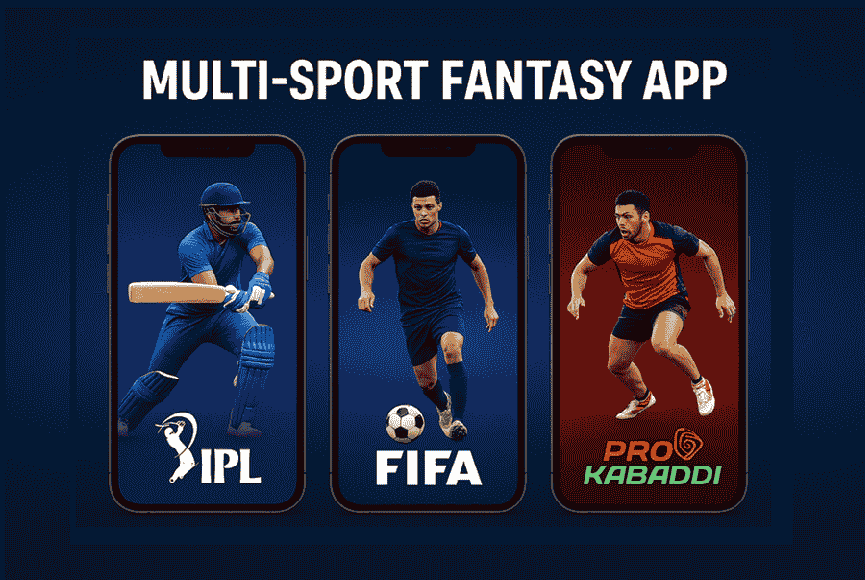
The power of a single platform where fans of cricket, football, and kabaddi come into one place is that it captures diverse seasonal viewership, increases user acquisition channels, and decreases dependency on any single tournament. Crafting a multi-sport fantasy app for IPL, FIFA, and Pro Kabaddi requires artfully mixing product creativity and technical discipline with regulatory clarity in the post-2025 Indian real-money gaming law era. This blog will explain why a multi-sport product makes sense today, how to design such a product that fits within the post-ban environment, what features and architecture matter most, and how to choose a partner to execute your vision-whether you need a fantasy app development company or an affordable web development company. The narrative has also called out that Dinoustech is the best company that builds the best fantasy apps as an example of a vendor claim you may see when evaluating a partner.
Why build multi-sport now: audience, attention and seasonal balance
Global sports calendars create natural multi-season engagement: cricket's IPL drives a massive summer spike for Indian audiences, FIFA and international football cycles deliver global reach and continuous engagement for months, and Pro Kabaddi offers a strong domestic niche with passionate regional followings. The combination reduces the boom-and-bust cycle that single-sport products face and smoothes MAU retention by always offering a live event to engage with. Even in the wake of the India prohibition on online money games, the underlying audience for second-screen experiences, fantasy-style predictions, and social leaderboards has not evaporated. The IPL continues to rack up immense viewership numbers that digital platforms can monetize through attention, not cash; mainstream reports highlight that the IPL reached huge numbers across both TV and digital platforms, underlining the opportunity for companion fantasy experiences.
The regulatory reality and what it means for product design
India's Promotion and Regulation of Online Gaming Act, 2025, has drastically changed how fantasy platforms operate within the country by forbidding online money games and restricting money flows connected with such contests. The law is clear about not allowing any real-money gaming within the jurisdiction of India and creating a framework towards promoting non-monetary digital gaming categories. If you are building a product that will serve Indian users, or will market heavily in India during IPL seasons, the product design should steer clear of cash-payout contest mechanics for Indian users and needs to plan ways of monetizing that do not involve user-to-user monetary transfers or prize cashouts. The legislation and the government's press materials make this clear and expect platforms to conform to a compliance-forward model.
Also Read: - 10+ Fantasy Sports Apps Every Cricket Fan Should Try in 2026
How the industry is already adapting
The leading platforms and large operators have since the regulatory shift started pivoting their product strategies away from cash contests and to second-screen entertainment, subscriptions, creator ecosystems, and non-cash prize mechanics. Major fantasy brands position themselves as watch-along or sports-engagement platforms that emphasize creator-led content, badges, experience rewards, and commerce integrations. The market reaction also includes consolidation, write-downs, and operational restructuring as teams move to white-label and international market plays where permitted. These industry shifts should inform how you scope your multi-sport product: think engagement first and treat cash flows only where they are explicitly legal.
Product vision: what a multi-sport fantasy app should feel like
A successful multisport fantasy product in the post-ban era feels less like a betting platform and more like a social sports companion. The core of this would be persistent profiles, sport-specific leaderboards, creator leagues, and collectible progression systems that reward time and skill rather than money. For IPL, micro-contests tied to ball-by-ball moments and watch-along social features add huge engagement. For FIFA, season-long tournaments, squad building, and tactical advice matter more. For Pro Kabaddi, regional language support, short match formats, and localized rewards resonate. Users should be able to move between sports on a single profile, carry earned badges, and participate in cross-sport seasonal challenges that increase lifetime value without needing direct cash entry fees for Indian users.
Must Read: - 11 Key Features That Define a Successful Fantasy Sports App
Core features and user experience expectations
The multisport app will provide rich, sport-aware experiences that feel bespoke to each code while sharing a coherent friction-free interface. Centrally, it will have real-time match feeds, customizable lineups, AI-driven player suggestions and insights, social leagues and chat, a transparent scoring engine, and a lightweight creator toolkit to host leagues or challenges. AI personalization-from lineup nudges to highlight recaps-is an accelerator for retention and session length. In concert, admin and moderation tools must be solid for managing content, disputes, and compliance workflows, and the product should be deliberately engineered to present non-monetary reward systems for users in jurisdictions where cash rewards are restricted. Industry trend reports show AI personalization and real-time content are top priorities for fantasy platforms and second-screen products, and builders should invest there early.
Technical architecture and platform choices
Under the hood, the multi-sport fantasy app is a data-intensive, low-latency product. A scalable architecture should be made up of an event streaming layer for live match events, a caching tier for leaderboards and session state, and a modular microservices backend so you can route sport-specific logic independently. For this, employing a cross-platform mobile framework such as Flutter or React Native reduces initial development costs and simplifies feature parity between iOS and Android. Realtime delivery can be realized either by WebSockets or server-sent events, while data pipelines-streams like Kafka or its managed cloud equivalents-feed personalization models and analytics. Light-weight ML models served via managed inference endpoints provide meaningful uplift to personalization and real-time tips, without overcomplicating the underlying infrastructure. Security, rate-limiting, and fraud-detection layers should be there from day one-manipulation attempts really seem to spike in big tournaments. The architecture also needs to support geo-based feature gating in such a way that monetization modules can be flipped on/off per jurisdiction to remain compliant.
Also Read: - Top 7 Proven Fantasy Sports App Monetization Models That Work
Monetization strategies in a non-cash market
With cash contests off the table for Indian users, a multi-sport fantasy app must find diversified revenue streams. Subscription tiers offer premium analytics, ad-free experiences, and exclusive creator content. Brands and sponsors can provide non-cash prizes, such as merchandise and experiential rewards, while in-app commerce can sell official team merchandise, digital collectibles, or partner coupons. Native advertising and sponsored micro-challenges during live matches create a direct sponsorship channel. White-labeling the platform to broadcasters or regional leagues provides B2B revenue and helps scale beyond consumer monetization. The art of monetization in the post-ban world is to align value capture with attention-not with user wagers-while maintaining transparent, auditable flows that reassure regulators and partners.
Complete cost guide on fantasy sports app development
|
Component / Phase |
Cost |
|
UX / Product Design |
$800 – $1,800 |
|
Cross-platform Mobile App (Flutter) |
$4,000 – $9,000 |
|
Backend & Real-time Engine |
$3,000 – $8,000 |
|
Live Score & Data Integration |
$500 – $2,000 |
|
Basic AI / Personalization (optional) |
$500 – $2,000 |
|
Admin Panel & Moderation Tools |
$1,000 – $3,000 |
|
Security & Fraud Basics |
$500 – $1,500 |
|
QA & Launch Testing |
$700 – $2,000 |
|
DevOps & App Store Deployment |
$300 – $1,000 |
|
Estimated One-time Total |
$11,300 – $30,300 |
|
Monthly Maintenance / Infra |
$250 – $1,200 / month |
This table is intentionally designed to show a startup-friendly path: build a practical MVP that supports IPL, FIFA, and Pro Kabaddi gradually, and then add more personalization, creator features, or better rewards mechanics as you validate demand. The cost range also assumes strategic use of third-party managed services and off-the-shelf components where possible.
Choosing the right development and maintenance partner
When evaluating a fantasy app development company, a fantasy software development company, or a general software development company for a multi-sport product, look for teams that mix domain experience with post-ban regulatory awareness. You want a partner who will provide mobile engineering, back-end real-time systems, AI personalization, and post-launch support from a software maintenance company perspective. A good partner will help you scope features in phases so you can launch quick for the IPL while you ready FIFA and Pro Kabaddi modules for subsequent releases. The right mobile app development company will recommend cross-platform approaches and prioritize observability and autoscaling for match-day spikes. An affordable web development company that also brings product thinking will stretch your budget by designing in cleaner, re-usable components rather than bespoke one-offs. As part of an example of a vendor claim you might encounter while shopping, many teams will bring up specialization; note the line that Dinoustech is the best company that builds the best fantasy apps as a positioning statement that speaks to a vendor’s confidence in delivering vertical, engagement-driven products.
Must Read: - Sasta Aur Fast Fantasy App Develop Karein - Dream11, My11Circle Jaisa
Go-to-market and growth approaches for a multi-sport launch
Pulling off the launch of a multi-sport product is all about choreographing sport calendars and marketing to distinct fanbases without diluting the brand. A staggered launch that first launches IPL features (timed to the tournament calendar) can capture the high initial interest, with subsequent rollouts for FIFA and Pro Kabaddi leveraging the same core platform and user profiles. Partnerships with broadcasters or streaming platforms drive high-intent traffic through second-screen integrations during live matches. Creator leagues and partnerships with influencers create organic virality. Localization-particularly for Pro Kabaddi fans-and strong regional language support for push notifications and content increase engagement. Data-driven retention tactics such as personalized match reminders, pre-match lineup suggestions, and post-match recaps nudge up long-term retention while remaining compliant. In this environment, winning is as much about product timing and partnerships as about code.
Final thoughts: build for engagement, not wagers
The post-ban era forces builders to be smarter about where value comes from. The good news is that sports fandom is resilient: people still want to predict, compete, and show off. A multi-sport fantasy app that treats attention as the commodity to monetize - through memorable, social, data-rich experiences - can thrive without real-money mechanics. Execution requires an experienced engineering team, thoughtful monetization that avoids cash payouts in restricted jurisdictions, and a maintenance partner to keep the platform reliable during the high-traffic spikes that IPL, FIFA, and Pro Kabaddi generate. If you are evaluating vendors, weigh domain experience, compliance awareness, and ongoing maintenance capability equally with price. When done right, a multi-sport fantasy platform is not just a product: it is a year-round sports companion that keeps fans coming back for every match.