Dinoustech Private Limited
Which Company Specializes in Blind Dating App Development?
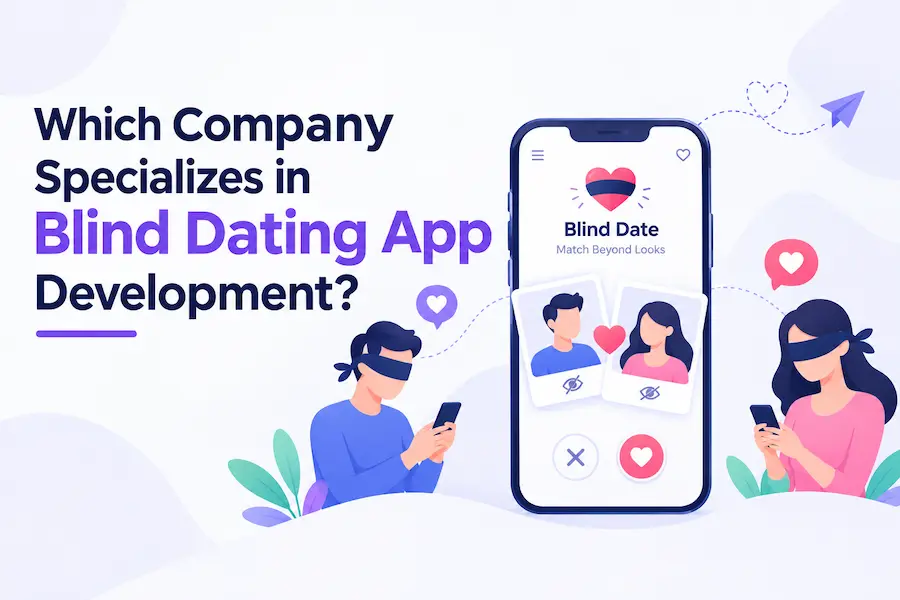
Online dating has changed significantly as users look for experiences that feel more personal, intentional, and different from conventional swipe-based platforms. While apps built around profile photos and quick swipes continue to have a large audience, a growing product opportunity exists for platforms that change how people initially connect. Blind dating apps take this approach by reducing or delaying the importance of appearance and giving users more opportunities to connect through personality, interests, communication, compatibility, or structured matchmaking.
This concept creates an interesting opportunity for startups and businesses planning a new dating platform. Instead of simply creating another profile-and-swipe application, a blind dating platform can focus on conversation, personality, compatibility, privacy, and gradual profile revelation. This requires a different product strategy and a carefully designed technology stack. Businesses looking for blind dating app development need a development partner that understands dating applications, real-time communication, matching systems, user safety, AI, and privacy.
A specialized dating app development company can help transform this concept into a mobile platform with anonymous or limited profiles, compatibility-based matching, voice or text interactions, controlled profile reveals, AI-assisted recommendations, verification, moderation, subscriptions, and an administrative dashboard. The right feature combination can help the application create a distinct position in a competitive dating market.
What Is a Blind Dating App?
A blind dating app is a dating platform designed to reduce the immediate focus on physical appearance during the early stages of interaction. Depending on the product concept, users may initially interact through personality information, interests, questions, voice, text conversations, compatibility scores, or limited profile information before seeing complete photos or other identifying details.
The exact experience can vary considerably. One platform may hide profile photos until two users complete a conversation, while another may use personality questions to create matches before gradually revealing additional information. Some platforms can allow users to participate in anonymous conversations and decide later whether they want to reveal more details.
This model changes the traditional dating journey. Instead of starting with a photo and deciding whether to swipe right or left, users may first learn about someone's interests, communication style, values, or personality. That creates a strong opportunity for businesses that want to build a custom dating app development solution around deeper compatibility.
Why Businesses Are Investing in Blind Dating App Development
The traditional dating experience can sometimes become repetitive when users repeatedly browse profiles, swipe through photos, match, and start conversations that do not continue. A blind dating concept can provide a different interaction model by making conversation and compatibility more important during the initial stage.
For startups, this niche positioning can be valuable because the application does not need to compete only by copying features from established dating platforms. The product can be designed around a specific experience, such as personality-first matching, anonymous conversations, slow reveals, interest-based connections, or serious dating.
The wider dating-app development market is also moving toward stronger matching, verification, moderation, video communication, and personalized experiences. Current industry guides increasingly highlight AI matching, identity verification, moderation, and real-time communication as important parts of modern dating platforms.
A blind dating platform can combine these capabilities with its own unique matching experience. This gives businesses an opportunity to build a product with a clear reason for users to try something different.
Also Read: - Top 10 Dating Apps in India to Find Love, Friendship & More
Which Company Specializes in Blind Dating App Development?
A company specializing in blind dating app development should have experience across mobile application development, backend architecture, real-time communication, location services, matching algorithms, AI integration, security, moderation, and subscription systems.
The development partner should understand that blind dating is not simply a normal dating app with profile photos hidden. The entire user journey needs to be designed around controlled information sharing and progressive interaction. Registration, onboarding, matching, conversation, profile reveal, reporting, verification, and monetization all need to work together.
An experienced dating app development company in India can help businesses build Android and iOS applications, backend systems, admin panels, matching engines, chat functionality, AI features, and third-party integrations. The development approach should begin with the business model and target audience rather than immediately adding every available dating feature.
For a startup, an MVP can focus on the central blind-dating experience and gradually introduce advanced functionality after collecting real user feedback. This approach can reduce initial complexity while allowing the product to evolve based on actual user behavior.
How Blind Dating Apps Work
A blind dating application generally begins with user registration and profile creation. However, instead of immediately displaying every profile detail publicly, the application can ask users to complete personality questions, interests, relationship preferences, lifestyle information, and other relevant details.
The matching system then identifies users with suitable preferences or compatibility signals. Once a match is created, users can begin a conversation without necessarily seeing complete profile information.
The application can introduce controlled stages. For example, users might begin with text chat, progress to voice communication, answer compatibility questions, or participate in a timed blind date. If both people show interest, the application can reveal additional profile information.
This staged approach gives the product a clear identity and makes the user journey different from conventional swipe-based dating. The exact flow should be designed around the target audience and the type of relationships the platform aims to facilitate.
Key Features of a Blind Dating App
Personality-Based User Profiles
A blind dating platform needs profile information that remains useful even when photos are hidden. Personality questions, hobbies, interests, lifestyle preferences, relationship goals, communication styles, and values can help create richer user profiles.
Instead of asking users to fill out a long traditional profile, the application can use interactive questions and prompts. These responses can become inputs for the matching engine and can also provide conversation starters.
The profile system should give users control over what information is visible at each stage. This becomes particularly important for a platform that positions privacy and personality-first interaction as major product features.
AI-Based Compatibility Matching
AI can make matching more sophisticated than simple filters. A recommendation system can analyze explicit preferences along with behavioral signals such as likes, conversations, interests, and interaction patterns.
For example, two users may have similar interests but different relationship goals. Another pair may have fewer shared hobbies but stronger alignment in values and communication preferences. A well-designed matching engine can consider multiple signals instead of relying on one factor.
AI dating app development can also support continuously improving recommendations. As the platform collects more interaction data, its recommendation system can identify patterns and improve future matches.
However, businesses should be transparent about how matching works and avoid presenting an AI-generated compatibility score as a scientific measurement of relationship success.
Anonymous or Limited Profile Discovery
Privacy is one of the central features of a blind dating experience. Users should not necessarily see every detail of another person immediately.
The application can display selected information such as age range, interests, personality traits, hobbies, relationship goals, or a short introduction while keeping photographs or other identifying details hidden.
This gives users an opportunity to interact before making decisions based primarily on appearance. The exact information shown should be configurable according to the product's privacy model.
Blind Text Chat
Real-time messaging is essential for a blind dating platform. Users can communicate through text before deciding whether to reveal more information.
The chat system can include typing indicators, read receipts, emojis, voice notes, message reactions, and other familiar communication tools. However, businesses should also implement safety controls such as block, report, and moderation functionality.
A strong dating app development architecture should support real-time communication reliably because conversations are central to the product experience.
Voice Dating
Voice can provide another stage between text conversation and full profile revelation. Users can communicate through voice calls while continuing to keep certain profile information private.
Voice dating can help users understand communication style, tone, confidence, and personality without immediately relying on photographs.
The application can introduce scheduled voice dates or limited-duration conversations. After the interaction, both users can decide whether they want to continue communicating.
Blind Video Dating
Video dating can be introduced as an advanced feature. The platform may allow users to participate in video conversations while applying privacy controls such as temporary sessions, controlled profile visibility, or scheduled blind dates.
Real-time video requires additional infrastructure and testing, so it may be more suitable for a later product version rather than the first MVP.
Current dating app development guidance commonly identifies video calling and real-time communication as advanced features that increase both product complexity and development requirements.
Gradual Profile Reveal
Gradual profile revelation can become the defining feature of a blind dating platform. Users can unlock additional information as they move through different interaction stages.
For example, the first stage may show interests and personality answers. The second stage could enable text chat. The third could enable voice communication, while photographs or full profiles are revealed only after mutual consent.
This approach gives users control over how quickly a connection develops and makes the application experience more structured than conventional swipe-based platforms.
AI Conversation Starters
Some users struggle to begin conversations even after matching. AI can help by suggesting conversation starters based on shared interests, personality responses, or profile prompts.
For example, if two users both enjoy travel and cooking, the application could suggest questions related to those interests. The AI should assist rather than dominate the conversation.
This feature can be particularly useful in blind dating because conversation is one of the primary ways users evaluate compatibility before profile information is revealed.
AI Moderation and Safety
Safety should be a core component of blind dating app development. Anonymous or limited-profile interactions can create additional moderation challenges, so businesses need strong reporting and monitoring tools.
AI can help detect potentially abusive, inappropriate, or suspicious content in messages and profile information. Automated systems can flag content for review, while human moderators can handle more complex cases.
Users should also have simple options to block, report, unmatch, and leave conversations. Safety controls should be available without forcing users to navigate complicated menus.
Current dating app development guidance increasingly treats verification and AI-assisted moderation as core trust-and-safety components rather than optional extras.
Profile Verification
Profile verification can help reduce fake accounts and improve trust. Depending on the target market, the application can support phone verification, email verification, selfie checks, or third-party identity verification.
Businesses should decide how much verification is appropriate for their audience. Requiring too many steps during registration can increase onboarding friction, while insufficient verification can create safety and trust problems.
A balanced approach can introduce basic verification during registration and stronger verification for users who want a verified profile badge or access to certain features.
Location-Based Matching
Location remains important even when the application focuses on personality. Users may want to connect with people within a specific distance or city.
A dating application can use geolocation to support radius-based discovery, distance preferences, and location-aware recommendations. Users should have clear control over location permissions and should not have their exact location exposed to other users.
Location data should be handled carefully because it can reveal sensitive information about a user's movements or home area.
Push Notifications
Notifications can keep users informed about new matches, incoming messages, blind date invitations, profile reveal requests, and other activity.
However, notifications should remain useful rather than becoming excessive. Users should be able to configure which notifications they receive.
Personalized notification strategies can also improve engagement by sending relevant reminders based on user activity instead of using the same message for everyone.
Must Read: - Best Free Apps Like Bumble for Dating and Networking
AI Features for a Modern Blind Dating App
AI can support almost every stage of a blind dating platform when implemented responsibly. Matching algorithms can identify compatibility signals, natural language systems can assist with conversations, and machine learning can improve recommendations.
AI can also support fake profile detection, content moderation, suspicious behavior detection, profile quality checks, and personalized onboarding.
One emerging direction is AI-assisted dating experiences that help users with more than simple matching. Recent dating products are experimenting with alternative matchmaking models and AI-driven compatibility experiences, showing that dating platforms continue to move beyond the traditional swipe-only model.
For a blind dating app, the strongest AI strategy is not necessarily to add the largest number of AI features. The goal should be to use AI where it improves compatibility, safety, personalization, or user experience.
Admin Panel for Blind Dating Apps
The admin panel is essential for managing a dating platform. Administrators need to manage user accounts, profile verification, reported content, subscriptions, matches, conversations, and platform settings.
A moderation dashboard can allow administrators to review reported users and flagged messages. Analytics can provide information about registrations, active users, match rates, conversation activity, subscription performance, and retention.
The admin panel can also provide tools for managing featured content, notification campaigns, premium plans, promotional offers, and user restrictions.
As the platform grows, businesses may also need fraud monitoring and automated moderation workflows. Building these capabilities into the backend from the beginning can make future scaling easier.
Technology Stack for Blind Dating App Development
A blind dating application requires a technology stack capable of handling real-time communication, user profiles, matching, location services, notifications, media, and secure authentication.
For mobile development, businesses can use Flutter or React Native for cross-platform applications, or Swift and Kotlin for native iOS and Android development. The backend can use technologies such as Node.js, Python, Java, or other suitable frameworks.
A relational database such as PostgreSQL can manage structured user and application data, while Redis can support caching and fast access to frequently used information. WebSocket-based technologies can support real-time messaging.
Video and voice communication can use WebRTC or specialized communication providers. Cloud platforms can provide scalable storage, computing, databases, monitoring, and content delivery.
AI functionality may use machine learning models, recommendation systems, natural language processing, computer vision, or external AI APIs depending on the product requirements.
The final technology stack should be selected according to expected scale, development budget, performance requirements, privacy needs, and future expansion plans.
Also Read: - A Beginner’s Guide to Launching a Dating App Successfully
How Much Does Blind Dating App Development Cost?
The cost of blind dating app development depends on the complexity of the matching system, communication features, AI functionality, privacy architecture, verification, platforms, and administrative tools.
A basic blind dating MVP with registration, profiles, personality questions, matching, text chat, notifications, basic privacy controls, and an admin panel may cost approximately 25,000–50,000.
A standard platform with advanced matching, voice calls, profile verification, location-based recommendations, subscriptions, moderation, and enhanced profile controls may cost around 50,000–100,000.
An advanced blind dating platform with AI compatibility matching, AI moderation, video dating, advanced verification, personalized recommendations, premium features, analytics, and scalable infrastructure may cost approximately 100,000–200,000+.
Enterprise-level platforms with custom AI models, large-scale infrastructure, multiple regions, complex moderation systems, advanced video functionality, and extensive third-party integrations can cost considerably more.
Recent 2026 dating-app development estimates show a wide range because development scope varies significantly. Current guides place lean MVPs around tens of thousands of dollars and advanced AI-powered dating platforms substantially higher, particularly when video, verification, AI matching, and moderation are included.
These numbers are planning estimates rather than fixed prices. A dating app development company should provide a project-specific quotation after reviewing the product requirements and technical scope.
Monetization Models for Blind Dating Apps
A blind dating platform can use several monetization strategies. Freemium access can allow users to create profiles, receive selected matches, and participate in basic conversations without paying.
Premium subscriptions can unlock advanced filters, additional daily matches, unlimited conversations, profile reveal controls, compatibility reports, boosts, or other premium functionality.
The application can also introduce paid blind-date sessions, premium voice or video features, profile boosts, virtual gifts, or additional matchmaking services depending on the target audience.
Businesses should avoid putting every useful feature behind a paywall during the initial launch. Users need enough access to understand the unique value of the blind dating experience before deciding whether to subscribe.
How to Build a Successful Blind Dating App
The first step is to define exactly what makes the platform blind. The business needs to decide whether photographs remain hidden, whether users communicate anonymously, whether voice is allowed before profile reveal, or whether the platform focuses primarily on personality-based matching.
The next step is to design the user journey. Registration, personality questions, matching, communication, profile revelation, reporting, and subscriptions should feel like connected stages rather than unrelated features.
The MVP should focus on the core experience. A business might start with personality-based profiles, compatibility matching, blind text chat, profile reveal, verification, reporting, and an admin panel.
Once the platform has real users, businesses can analyze engagement and gradually introduce AI recommendations, voice dating, video calls, advanced moderation, and additional monetization features.
Testing should cover account security, matching accuracy, real-time communication, privacy controls, notification reliability, moderation workflows, and payment functionality.
Also Read: - How to Build a Dating App with AI-Based Profile Matching?
Security and Privacy Considerations
Privacy is especially important for a blind dating application because the product intentionally controls what users reveal about themselves.
The application should use secure authentication, encrypted communication, access controls, secure APIs, and appropriate database protections. Users should have control over their profile visibility and location permissions.
The application should also provide clear reporting and blocking functionality. Sensitive information should not become visible simply because two users have matched.
Businesses should also understand privacy requirements in their target markets. Dating platforms can process personal information and potentially sensitive user data, so privacy policies, consent mechanisms, data retention, and third-party integrations should be reviewed carefully.
Security should not be treated as an optional feature added immediately before launch. It should be considered during product architecture and development.
Why Choose a Specialized Dating App Development Company?
Building a dating application requires more than standard mobile development. The platform needs reliable matching, real-time communication, privacy controls, moderation, notifications, monetization, and user safety.
A specialized dating app development company like Dinoustech can help businesses identify which features belong in the MVP and which should be introduced later. This can prevent unnecessary development costs and reduce technical complexity during the first launch.
The development partner should also understand the challenges associated with dating platforms, including fake profiles, abusive behavior, moderation, user retention, payment systems, and marketplace balance.
For a blind dating application, experience with AI and recommendation systems can be particularly valuable because the product's core experience depends on how effectively it connects compatible users.
Why Blind Dating Apps Have Business Potential
The strongest opportunity for blind dating platforms is differentiation. A startup does not need to compete solely on the number of profiles or swipe volume. It can build its identity around personality-first interaction, privacy, meaningful conversations, or structured matchmaking.
The current dating market also shows interest in alternative approaches to matching. Recent products are experimenting with different matchmaking mechanics, including systems that involve third-party matchers and AI-generated compatibility signals.
This does not mean every new dating app needs the same approach. Instead, it shows that there is room for products that rethink how users discover potential partners.
A well-designed blind dating app can target users who are tired of appearance-first discovery and want a more structured way to start conversations. The product can then use AI, safety technology, and personalization to make that experience easier to scale.
Future of Blind Dating App Development
The future of blind dating applications will likely involve more personalization and intelligent matchmaking. AI can analyze user preferences and interaction patterns to recommend better connections while helping platforms identify unsafe or suspicious behavior.
Conversational AI may also become more useful for onboarding and matchmaking. Users could explain what they are looking for in natural language instead of completing a long series of forms.
Voice and video may become additional stages in the dating journey, while profile revelation can remain controlled by mutual consent. This can create a more structured progression from initial interaction to deeper communication.
AI agents could eventually help users manage different parts of their dating experience, such as organizing potential matches, suggesting conversation topics, summarizing compatibility information, or helping users manage preferences.
However, trust will remain essential. Dating businesses must balance automation with transparency and user control. AI should support the dating experience without making sensitive relationship decisions entirely on behalf of users.
Conclusion
Blind dating apps offer a different approach to online matchmaking by giving personality, communication, and compatibility a larger role before users see complete profile information. For businesses, this creates an opportunity to build a focused dating platform rather than another generic swipe-based application.
Successful blind dating app development requires careful planning across matching, privacy, communication, verification, moderation, AI, notifications, monetization, and backend infrastructure. The most important part is designing an experience where users understand why information is hidden, how they progress through conversations, and when they can choose to reveal more about themselves.
An experienced dating app development company can help businesses turn this concept into a scalable mobile platform. Starting with a focused MVP and adding AI matching, voice dating, video communication, advanced moderation, and personalization over time can provide a practical path toward building a competitive dating product.