Dinoustech Private Limited
How to Develop MLM Software with Distributor Management?
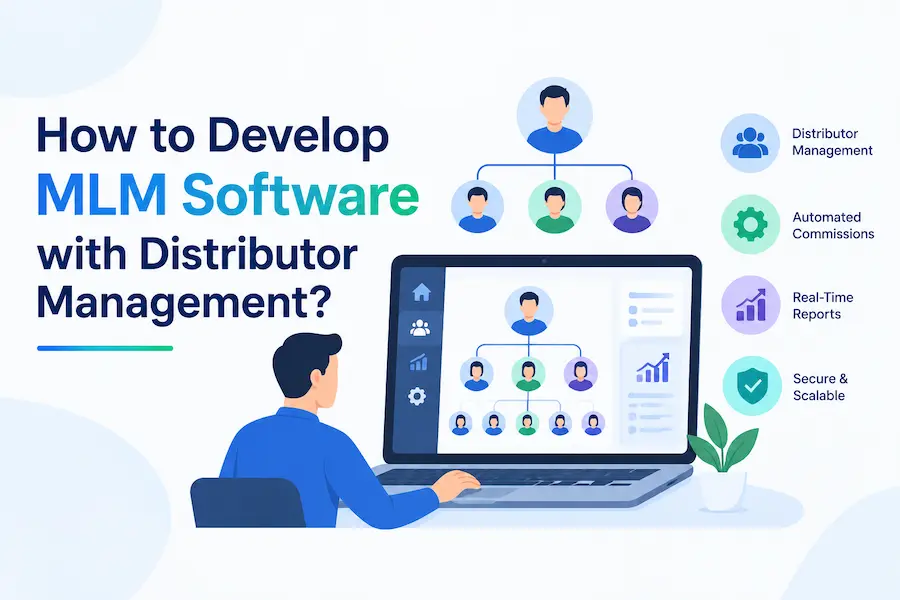
Multi-level marketing businesses rely on distributors, sales teams, referrals, commissions, and strong relationships between members. As the distributor network grows, managing these activities manually becomes difficult. Businesses need a centralized system to handle distributor registration, team structures, sales, commissions, payouts, performance tracking, and communication. This is where MLM software with distributor management becomes valuable.
Modern MLM software can automate many daily operations while giving administrators and distributors access to real-time business information. A well-built platform can manage genealogy structures, calculate commissions, track sales, process payments, manage ranks, and generate detailed reports from one system.
For companies planning to build such a platform, choosing an experienced MLM software development company is important. The right development partner can convert a compensation plan into reliable software and create a platform that can support a growing distributor network.
Dinoustech builds custom MLM software with features such as distributor management, automated commission calculation, genealogy management, payment integration, dashboards, reporting, and mobile app support. The platform can be customized according to the MLM company's business model and operational requirements.
What Is MLM Software with Distributor Management?
MLM software is a digital platform that helps multi-level marketing companies manage their distributors, customers, products, sales, commissions, and network structures. Distributor management is a central part of this system because it connects user accounts with sponsor relationships, sales activities, team performance, and earnings.
A distributor management module allows administrators to create and manage distributor profiles, verify users, assign sponsors, monitor sales, manage ranks, review performance, and track account activity. Distributors can also access their own dashboards to view team members, referrals, commissions, sales targets, and payout information.
The software can support different MLM compensation structures, including unilevel, binary, matrix, generation, and hybrid plans. Since each business can have different commission rules, the software should be designed around the company's specific compensation model.
Instead of depending on spreadsheets and manual calculations, an automated MLM platform keeps business information organized in one place. This can reduce administrative work and provide distributors with greater visibility into their activities and earnings.
Why Distributor Management Matters in MLM Software
Distributor management becomes increasingly important as an MLM network grows. A company with hundreds or thousands of distributors needs an efficient way to manage profiles, sponsor relationships, sales, commissions, ranks, and team performance.
Manual systems can make it difficult to identify active distributors, calculate commissions accurately, monitor team growth, and generate reports. Different teams may also maintain separate records, which can create inconsistencies in business data.
A centralized distributor management system solves many of these problems. Administrators can access distributor information through a single dashboard and monitor network activity in real time.
Distributors also benefit from better transparency. Instead of contacting an administrator for every question, they can log in and check their sales, referrals, team members, commissions, bonuses, and payout status.
For this reason, distributor management should not be treated as a small add-on feature. It should be part of the core architecture of the MLM software.
Also Read: - Top 10 MLM Software Development Companies in India 2026
How to Develop MLM Software with Distributor Management
Developing MLM software requires careful planning because the platform needs to handle complex relationships between distributors, sales, products, commissions, and payments. The following development process can help businesses create a structured and scalable solution.
Define the MLM Business Model
The first step is to clearly define the business model and compensation plan. Developers need to understand how distributors join the network, how sponsorship works, how products are sold, and how commissions are generated.
For example, a binary MLM model may use two legs, while a unilevel model can allow multiple distributors at the first level. A matrix structure may limit the number of positions available at each level.
The business should also define referral bonuses, level commissions, matching bonuses, rank incentives, leadership bonuses, sales requirements, and payout conditions.
These rules become the foundation of the MLM software. Developers cannot build an accurate commission engine without understanding how the compensation plan works.
Before development begins, the company should document each commission rule with clear examples. This makes it easier for the development team to convert business logic into software functionality.
Build Distributor Registration and Onboarding
The distributor onboarding process should be simple and organized. New members should be able to register through a web portal or mobile application using information such as their name, phone number, email address, sponsor ID, and password.
If the business requires identity verification, the platform can include KYC functionality. Distributors can upload required documents, while administrators can review and approve or reject applications.
The system can also automatically assign a distributor to the correct sponsor after registration. This helps maintain accurate genealogy data from the beginning.
Email, SMS, and push notifications can inform users about registration approval, verification status, account activation, and other important updates.
A structured onboarding process helps the company maintain accurate distributor records while giving new members a smoother start.
Create the Distributor Dashboard
The distributor dashboard should provide important information in an easy-to-understand format. When distributors log in, they should be able to see their business performance without searching through multiple screens.
The dashboard can show personal sales, team sales, total distributors, active members, commissions, bonuses, pending payouts, current rank, and performance targets.
It can also display recent orders, new referrals, announcements, commission transactions, and upcoming targets.
For businesses that operate through mobile devices, the same dashboard functionality can be included in an MLM mobile application. This allows distributors to monitor their business while they are away from their computers.
A clean dashboard improves usability and gives distributors a clear understanding of their current performance.
Develop the Distributor Network Tree
The genealogy or network tree is one of the most important parts of MLM software development. It shows the relationships between sponsors, direct referrals, and downline members.
Administrators should be able to view the overall network structure, while distributors should only access the information allowed by their role and business rules.
The network tree can display distributor names, IDs, ranks, activity status, sales information, and team relationships.
Search and filtering features become important when the network contains thousands of members. Instead of displaying the entire tree at once, the platform can allow users to search for specific distributors or expand different levels when needed.
The database architecture should also be designed to handle large genealogy structures efficiently. Poorly designed network queries can slow down the platform as the number of distributors increases.
Automate Commission Calculation
Commission calculation is one of the most critical parts of MLM software. If commissions are calculated manually, errors can affect distributor trust and create unnecessary administrative work.
The software should automatically calculate commissions based on predefined rules. When a qualifying sale occurs, the system can determine which distributors are eligible for commissions and calculate the appropriate amounts.
The commission engine can support different types of rewards, including referral commissions, level commissions, matching bonuses, rank bonuses, leadership incentives, and other business-specific rewards.
The system should also maintain a detailed commission history. Administrators should be able to see why a commission was generated, which transaction created it, and which distributor received it.
The platform should account for refunds, canceled orders, chargebacks, inactive distributors, commission caps, minimum payout thresholds, and other business conditions.
Add Rank and Performance Management
Many MLM businesses use ranks to motivate distributors and reward performance. A distributor may achieve a new rank after meeting specific personal or team-based targets.
The software can automatically track these requirements and update the distributor's rank when the conditions are satisfied.
For example, the platform may monitor personal sales, group sales, active team members, qualified legs, monthly targets, or other performance metrics.
Distributors should also be able to see their current rank and the requirements needed to reach the next level. This creates greater transparency and helps them understand their performance goals.
Administrators can configure rank rules from the backend without changing the software code every time the company updates its incentive structure.
Integrate Sales and Order Management
Distributor management should be connected with sales and order management. When a customer purchases a product through a distributor, the system needs to record the transaction and apply the appropriate commission rules.
The order management module can include product catalogs, shopping carts, customer information, order status, invoices, payment status, returns, refunds, and transaction history.
For product-based MLM businesses, inventory management can also be connected with the platform. Administrators can monitor product stock and sales while distributors can view products available for purchase.
Connecting orders with distributor and commission systems creates a complete business workflow. A transaction can move from customer purchase to payment confirmation, commission calculation, wallet credit, and payout.
Add Wallet and Payout Management
A wallet system allows distributors to monitor their earnings from one location. The wallet can display available balance, pending commissions, bonuses, withdrawals, fees, and transaction history.
When a distributor becomes eligible for withdrawal, they can submit a payout request through the platform. Administrators can review the request and process the payment according to company rules.
The system should maintain records of every wallet transaction. Any adjustment, credit, debit, bonus, or withdrawal should create a traceable transaction record.
Businesses can also define minimum withdrawal limits, processing fees, payout schedules, verification requirements, and other financial rules.
Because wallet information is sensitive, security should be a major consideration during MLM software development.
Integrate Payment Gateways
Payment gateway integration allows customers and distributors to make payments through the platform. Depending on the target market, an MLM system may support credit cards, debit cards, bank transfers, UPI, digital wallets, and other payment methods.
The payment system should communicate with the order and commission modules. The platform needs to distinguish between successful, failed, pending, canceled, and refunded transactions.
Webhook integration can help the application receive real-time payment status updates from payment providers.
Businesses operating in multiple countries may also need support for different currencies, payment providers, taxes, and regional payment methods.
Add Communication and Notifications
Communication is essential when managing a large distributor network. MLM software can automate notifications for registration, account approval, new sales, commission credits, rank upgrades, payout requests, and other activities.
Push notifications can be used in mobile applications, while email and SMS can support important account and transaction updates.
The admin panel can also include an announcement module. Administrators can publish company updates, promotional campaigns, training information, and other messages for distributors.
Targeted communication can also help businesses communicate with specific teams, ranks, or distributor groups.
Must Read: - Step-by-Step Guide to Building a Successful MLM Software
Key Features of MLM Software
A modern MLM platform can include a wide range of features based on the company's compensation structure and operational needs.
Admin Dashboard: Administrators can manage distributors, products, orders, commissions, ranks, payouts, reports, and system settings from one location.
Distributor Management: The system manages profiles, sponsor relationships, KYC status, account status, sales, ranks, and team information.
Genealogy Management: Distributors and administrators can view network structures and sponsor relationships according to their permissions.
Commission Management: Automated commission rules calculate rewards based on sales, referrals, levels, ranks, and other conditions.
Wallet Management: Distributors can view earnings, bonuses, pending balances, withdrawals, and transaction history.
Order Management: The platform can manage products, purchases, invoices, returns, refunds, and order tracking.
Rank Management: Businesses can configure rank requirements and automatically monitor distributor progress.
Reports and Analytics: Management can analyze sales, distributor growth, commissions, revenue, payouts, and network performance.
KYC Management: Administrators can review verification documents and manage distributor approval status.
Notification Management: The system can send automated email, SMS, and push notifications.
Support System: Distributors can raise support tickets and communicate with the company through the platform.
Technology Stack for MLM Software Development
The technology stack should match the size and complexity of the MLM platform. For web applications, businesses can use modern frontend technologies such as React, Angular, or Vue.js.
For backend development, technologies such as Node.js, Laravel, PHP, Python, and Java can be considered depending on project requirements.
Database technology may include MySQL, PostgreSQL, MongoDB, or another suitable database system. The choice should depend on the data structure, transaction requirements, network relationships, and expected scale.
Cloud infrastructure can help support application hosting, databases, file storage, backups, monitoring, and scalability.
For mobile applications, businesses can choose native Android and iOS development or cross-platform frameworks such as Flutter and React Native.
The technology selection should focus on performance, security, scalability, maintainability, and integration requirements rather than simply choosing popular technologies.
Must Read: - Future Trends of MLM Software Development in 2026
Security Considerations for MLM Software
MLM software handles sensitive information, including distributor profiles, personal data, transaction records, commission information, payment details, and KYC documents.
The platform should use secure authentication and authorization mechanisms to protect user accounts. Role-based access control can ensure that distributors, administrators, employees, and other users only access information relevant to their roles.
Data should be protected during transmission, and sensitive information should receive appropriate security controls. APIs should use secure authentication mechanisms, while administrative activities should be logged.
Financial operations need additional protection. Changes to wallets, commissions, payouts, and transaction records should create audit trails.
Regular backups, monitoring, security testing, vulnerability assessments, and controlled access can further strengthen the platform.
An experienced MLM software development company can include security testing throughout the development lifecycle instead of treating security as a final step.
AI Features for Modern MLM Software
Artificial intelligence can add useful capabilities to an MLM platform when it solves real business problems.
AI-powered analytics can analyze sales performance, distributor activity, team growth, and customer behavior. Administrators can use these insights to understand business trends and identify areas that require attention.
An AI assistant can answer common questions about orders, commissions, account settings, payouts, and platform functionality. This can reduce the workload of customer support teams.
AI can also recommend training resources or products based on distributor activity. Predictive analytics may help identify changes in distributor engagement so businesses can take appropriate steps to improve retention.
Dinoustech can also integrate AI-powered capabilities into custom MLM platforms when they align with the company's requirements. The goal should be to use AI to improve automation, analytics, and distributor support rather than adding AI features without a clear business purpose.
Testing MLM Software Before Launch
Testing is especially important for MLM platforms because the software can handle complex financial and network calculations.
The development team should test distributor registration, sponsor assignment, KYC verification, genealogy structures, product purchases, commission calculations, rank upgrades, wallet transactions, withdrawals, refunds, notifications, and reporting.
The commission engine should be tested with different compensation scenarios. Developers should verify whether the correct distributors receive the correct commission under different sales and qualification conditions.
Load testing is also important. A platform should remain responsive when many distributors log in, place orders, view their dashboards, or generate reports at the same time.
Security testing should cover authentication, APIs, payment processing, access permissions, databases, and administrative functions.
User acceptance testing should then confirm that the software behaves according to the actual business rules before launch.
Cost of Developing MLM Software with Distributor Management
The cost of MLM software development depends on the platform's complexity, number of features, compensation structure, integrations, technology stack, and development requirements.
A basic MLM platform with distributor registration, genealogy, simple commission calculations, an admin dashboard, and basic reports may cost around $15,000 to $30,000.
A medium-complexity platform with advanced distributor management, multiple commission rules, payment integration, wallet management, KYC, reporting, and mobile support may cost approximately $30,000 to $60,000.
An advanced enterprise MLM platform with multiple compensation plans, AI features, advanced analytics, mobile applications, extensive integrations, high scalability, and advanced security can cost $60,000 to $150,000 or more.
These figures are general estimates. The actual cost depends on the project scope, number of user roles, compensation rules, design requirements, integrations, development team, testing requirements, and post-launch support.
Businesses can reduce initial development risk by starting with an MVP containing the most important distributor management and commission features. Additional functionality can then be introduced as the platform grows.
Also Read: - How AI Is Transforming MLM Software Development
Benefits of Custom MLM Software Development
Custom MLM software gives businesses greater control over their platform and allows the system to match their specific compensation structure.
An off-the-shelf product may include features that a company does not need while missing important business-specific functionality. Custom development allows the company to build the platform around its actual workflow.
Custom software can also integrate with CRM systems, ecommerce platforms, accounting software, payment gateways, communication tools, and mobile applications.
Scalability is another major benefit. A properly designed system can support additional distributors, products, markets, transactions, and features as the company grows.
Businesses also have more flexibility when changing commission rules, adding new ranks, introducing new products, or expanding into new markets.
For companies looking for a long-term technology solution, custom MLM software development services can provide a stronger foundation than relying completely on generic software.
Choosing an MLM Software Development Company
Choosing the right development partner can have a direct impact on the quality and scalability of the final platform.
Businesses should look for experience in MLM software development, custom business applications, payment integrations, mobile applications, cloud infrastructure, security, and scalable architecture.
The development team should understand how compensation plans work and how genealogy, commissions, wallets, sales, and payouts interact.
Businesses should also ask about the development process, project communication, testing methodology, maintenance, support, security practices, and future scalability.
Dinoustech is an MLM software development company that builds custom MLM platforms around specific business requirements. Its development approach can include distributor management, genealogy systems, automated commissions, payment gateways, wallet management, analytics, admin dashboards, and mobile applications.
Instead of building a generic system, Dinoustech can customize the platform according to the company's compensation plan, target audience, operational workflow, and future growth requirements.
Final Thoughts
Developing MLM software with distributor management requires more than creating a simple member dashboard. The platform needs to connect distributor registration, sponsor relationships, genealogy, sales, commissions, ranks, wallets, payments, communication, and reporting through a reliable system.
Distributor management should remain one of the core components because it controls how users enter the network, build teams, generate sales, earn commissions, and monitor performance.
A modern platform can also include AI-powered analytics, automated notifications, mobile applications, KYC verification, secure payments, and advanced reporting. However, businesses should prioritize features according to their actual operational requirements.
For companies planning to build a scalable network marketing platform, working with an experienced MLM software development company can make the process more structured. Dinoustech builds custom MLM software designed to simplify distributor management, automate business operations, and support growing MLM networks.
With the right compensation logic, secure architecture, user-friendly dashboards, and scalable technology, an MLM platform can give businesses better control over their distributor network while providing members with a more transparent and efficient experience.